
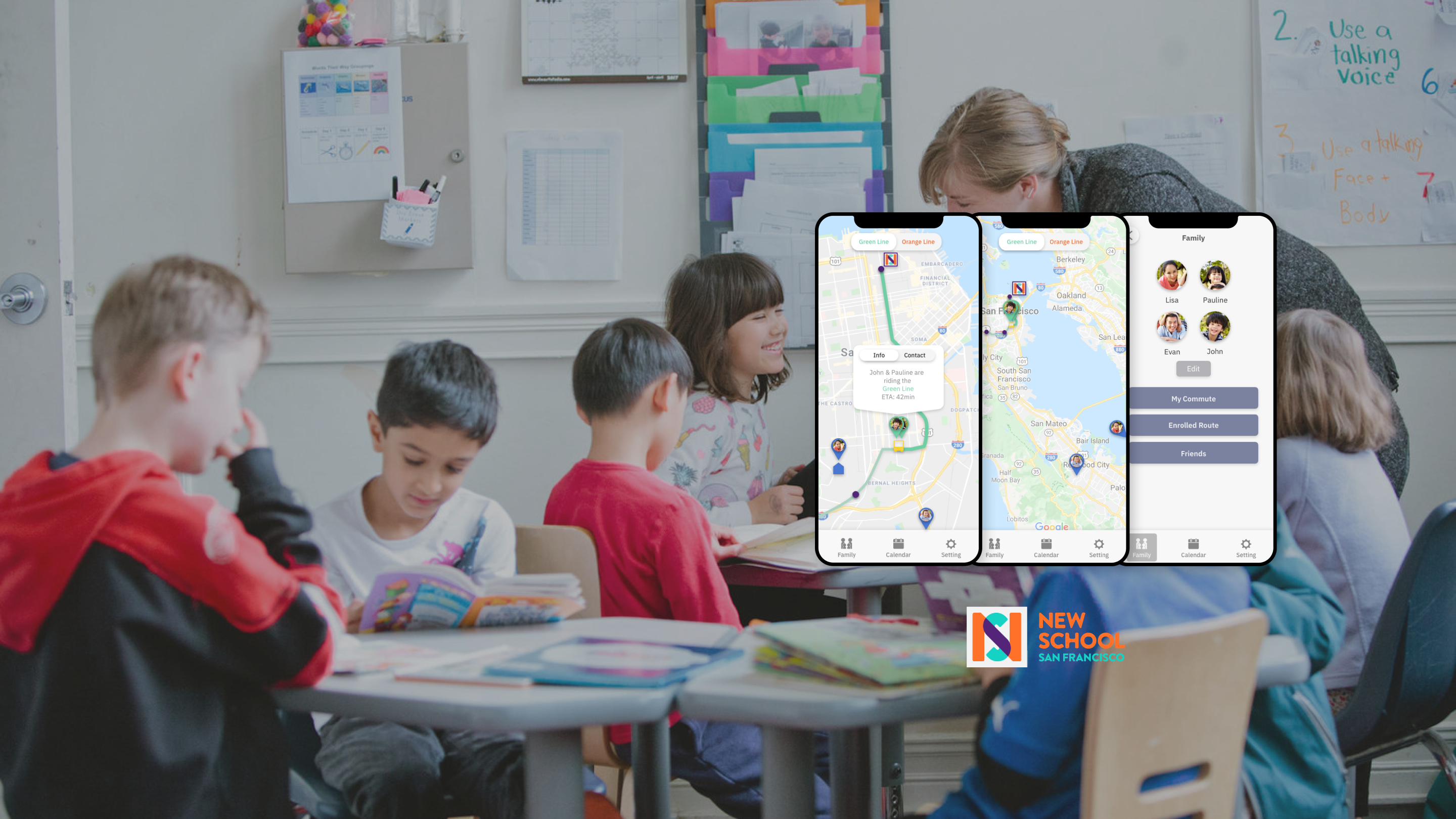
New School Family App
A family portal that enables flexibility in the parents' commute
Product Design | Mobile App | Design Research | Social Impact
The traditional impression of the yellow school bus has been part of the memory for many, however, things are a little different for schools with limited resources and in an urban setting.
We partnered with The New School of San Francisco, a K-12 charter school with a diverse and dedicated family community, to explore the possibility of an innovative transportation solution for the students to their new campus.
4 Month + 3 Weeks
Yifan Mao- Product Designer | Service Design
Blake Terry- Product Designer | Outreach Lead
Junyan Li - Product Designer | Mobile Design
Wiryan Tirtarahardja - Product Designer | Service Design
Figma
Miro
Adobe Creative Suite
Subject Observation
Survey Inquiries
User Interviews
Persona
Usability Testing
- Owned the end-to-end process of the New School Family App.
- Led the team throughout the user research phase, including coordinating the interviews and host brainstorming sessions.
- Actively participated in defining the design principles & success metrics.
- Conducted user testings and iterate upon existing prototypes.
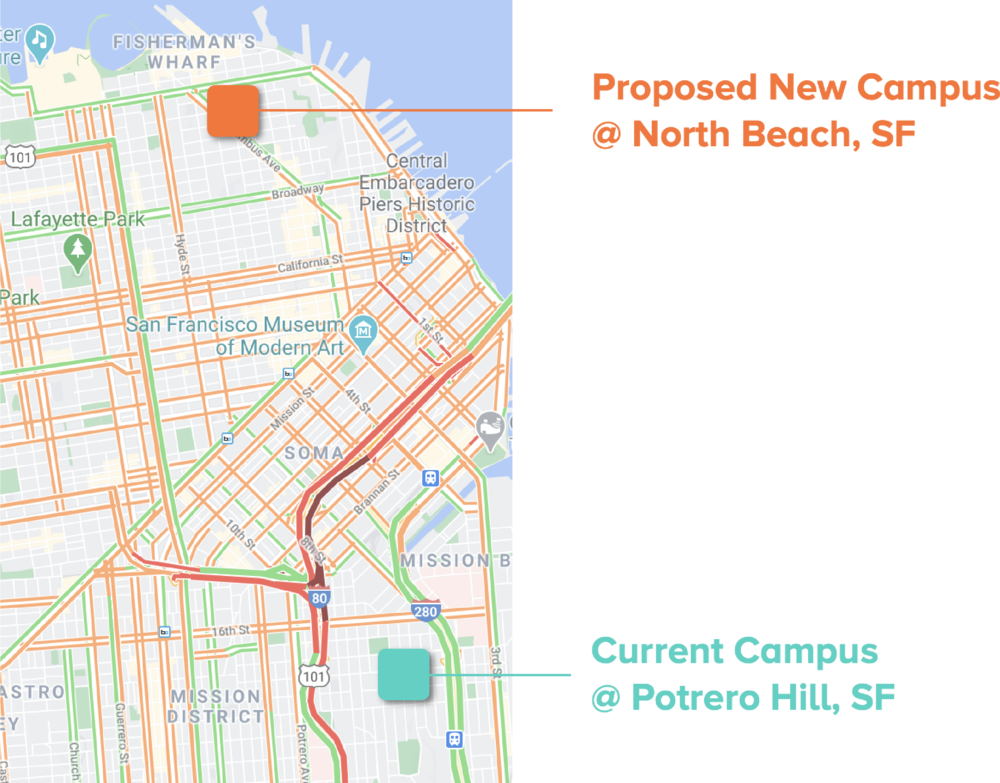
The K-12 charter school will be moving to North Beach in 2021, and the new location posed some great challenges for many families:
- Commuting across San Francisco during the rush hour is no easy task.
- The school doesn’t have a school bus program.
- The difficult commute may force parents to switch schools.
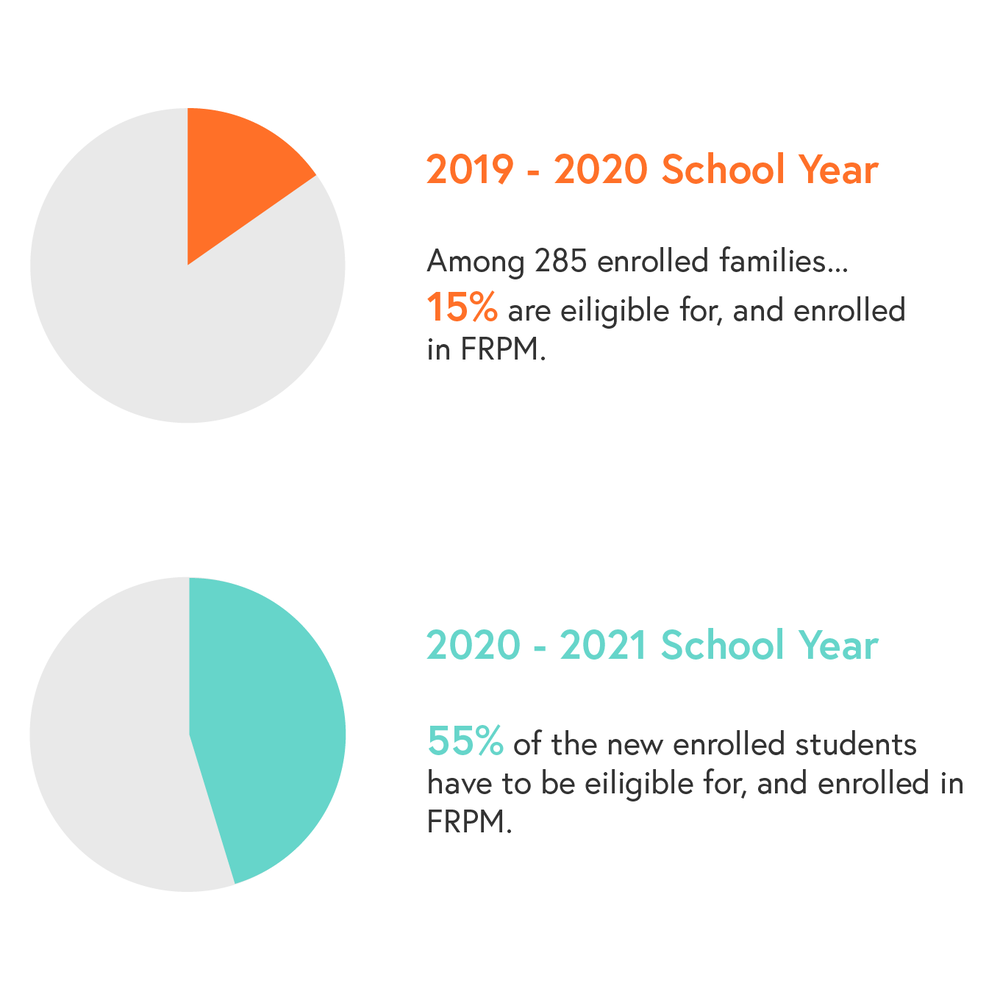
It is also crucial for the school to secure key fundings by maintaining a 55% minimum enrollment rate for new students who are qualified for the Free/Reduced-price Meal by the 2021 academic year.

Keeping the parents in the loop of the whole process will enable trust and better engagement with the school.

Accounting for different factors and shareholders’ needs throughout the design.

As the school grows & moves in the future, the bus plan will grow & adapt with it.
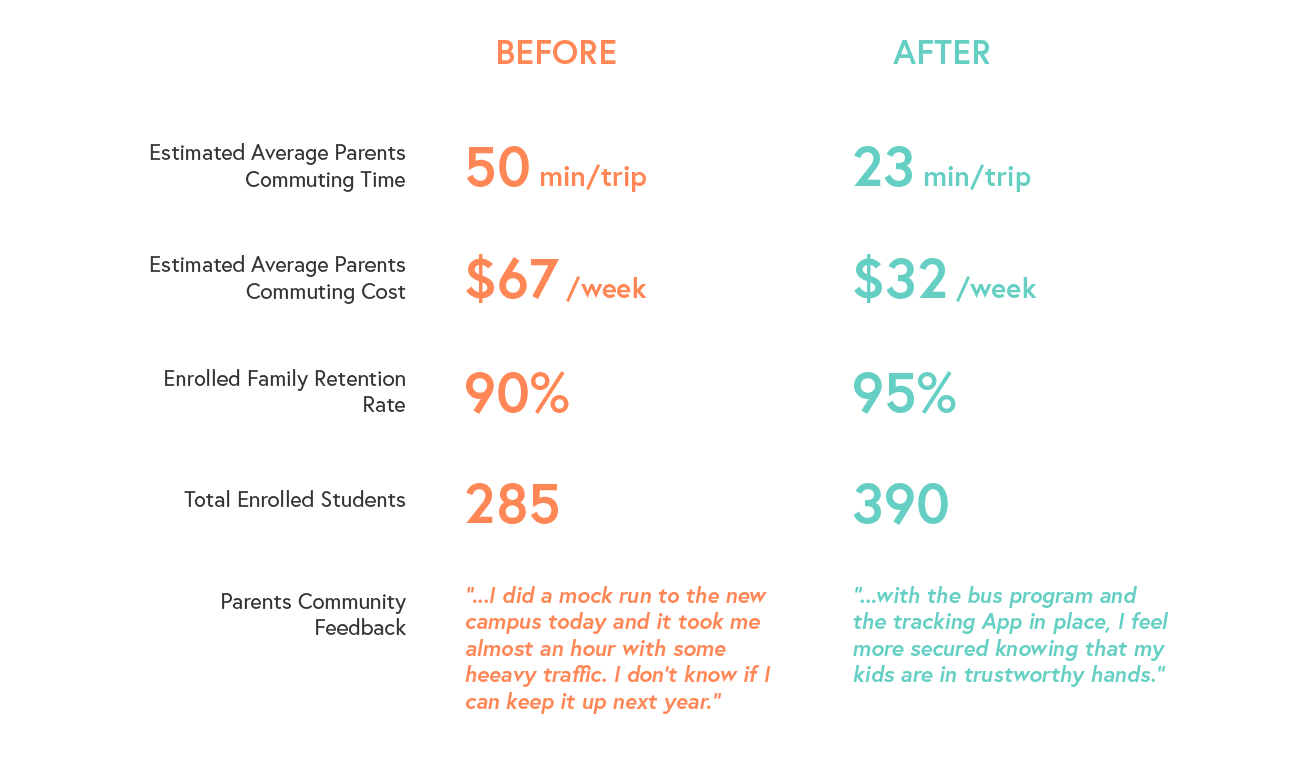
The end result is a systematic solution based on the feedback from the New School community. Its goal is to offer an affordable and efficient way of commute for the students while providing assurance to the parents by staying transparent and accessible. As part of the solution, I'm responsible for the end-to-end design process of the Family App.
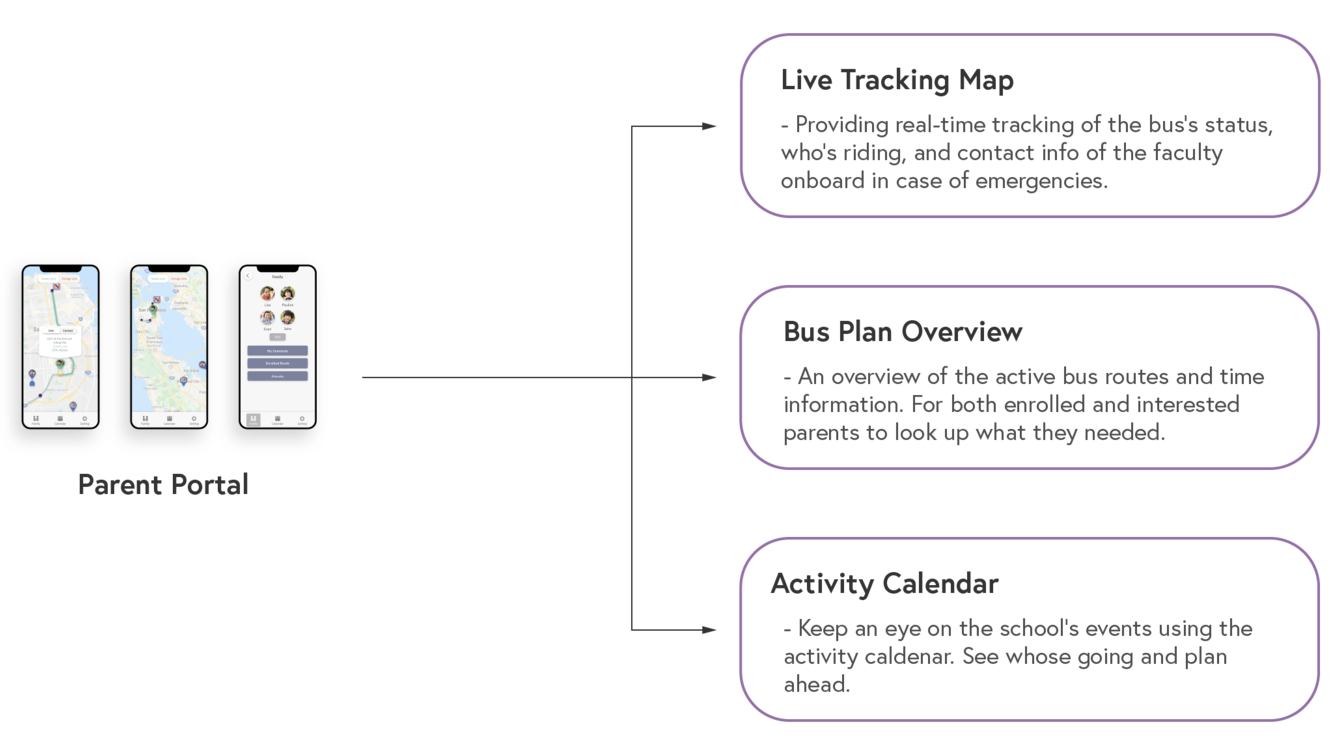
One of the major concerns of the parents is their kids’ safety and whereabouts. The Family App provides live tracking to the students’ location throughout the ride.
Nobody can remember everything all the time. Stay informed of the bus program’s routes, schedules, and planned stops.
No need to stare at the screen all the time. Family App will send notifications when the bus departs, on its way, and arriving at a station.
Never miss your kid’s next show! The calendar will keep track of all the important school events. You can also update the family’s status at any time.
In addition to the Family App, we also proposed an additional section to the New School’s website. Dedicated to the bus program, this landing page will be providing detailed information such as rate, policy, and qualifications to those who are interested in enrolling as well as current families.
Working closely with the school leadership and a parent committee, we plotted two bus routes to cover as many families as possible throughout the city to reduce their commute time to the new campus.
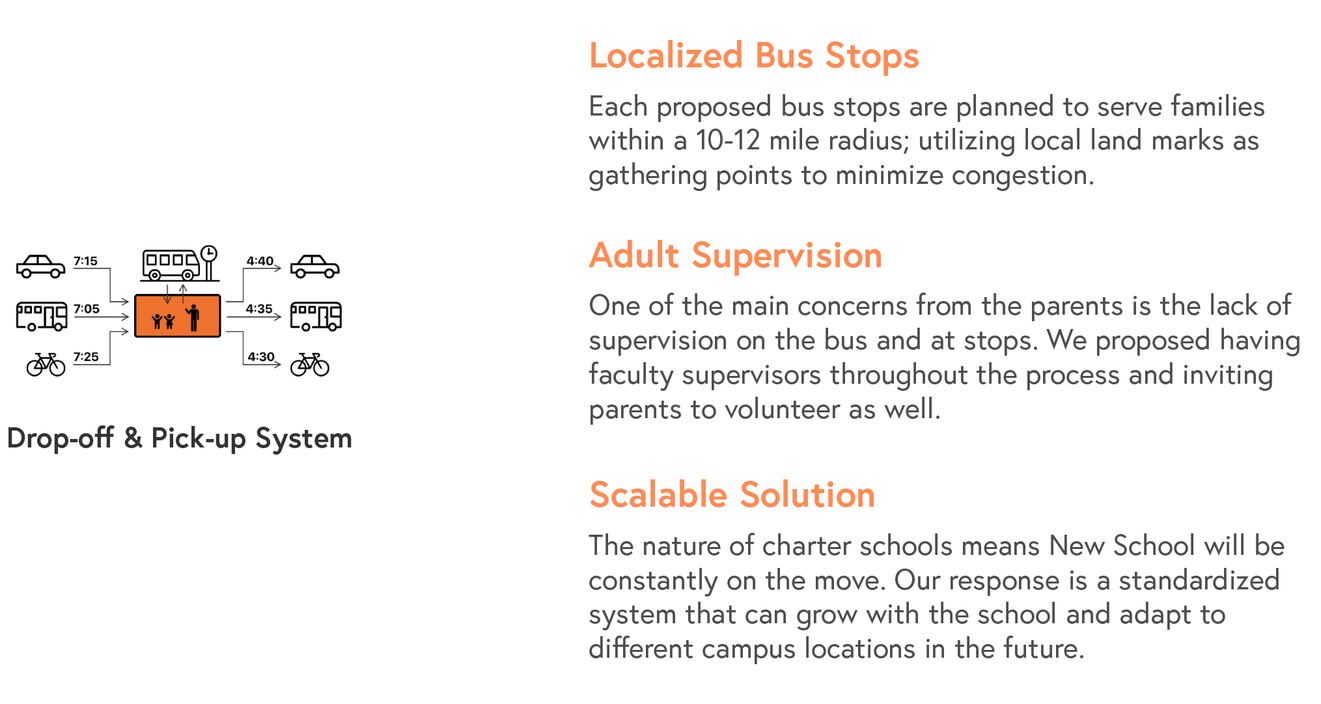
We propose to set up extended loading zones around every stop. So that parents can drop off & pick up their kids at either one of the stops overseen by a faculty member in order to reduce congestion around the area.

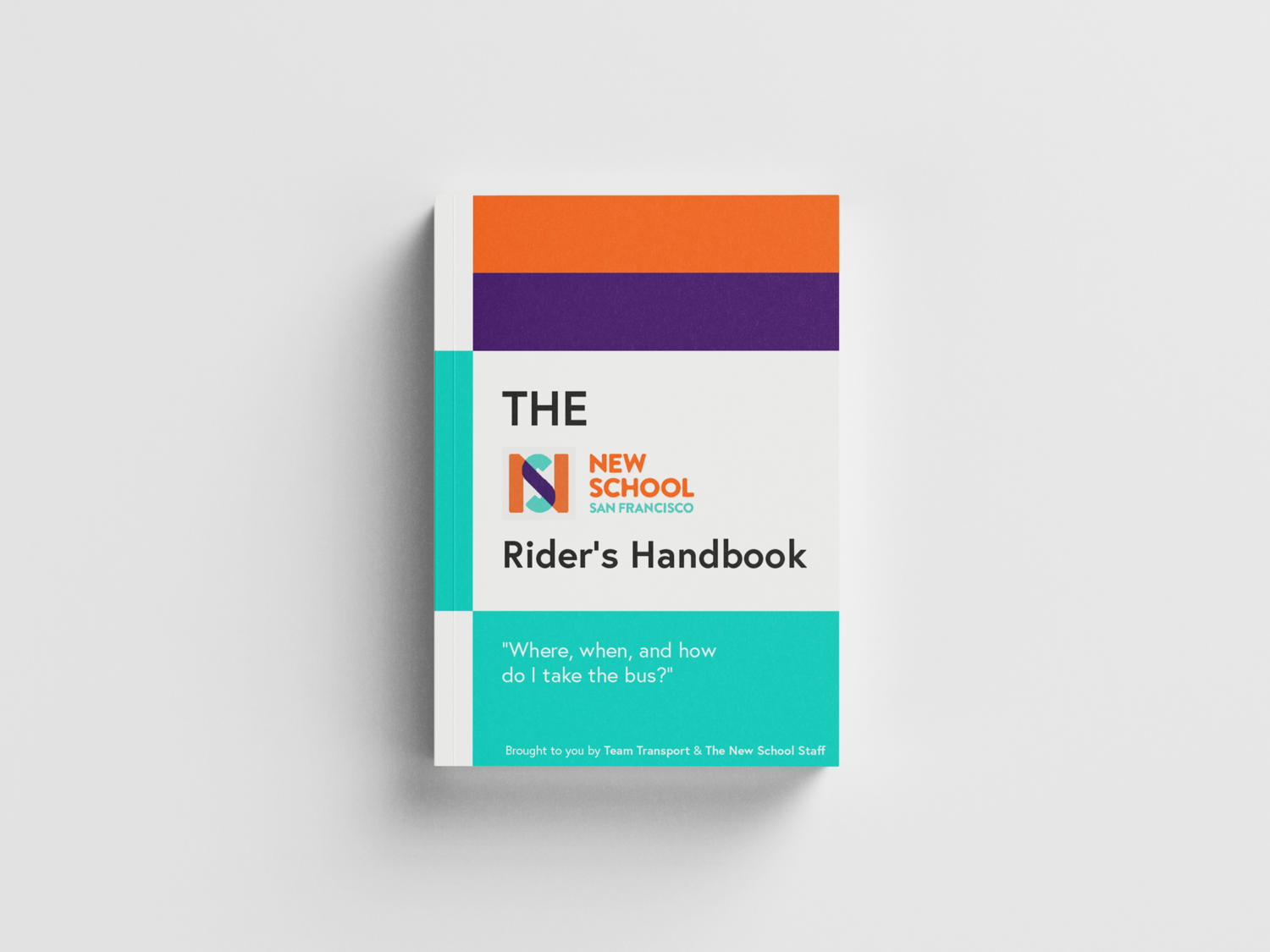
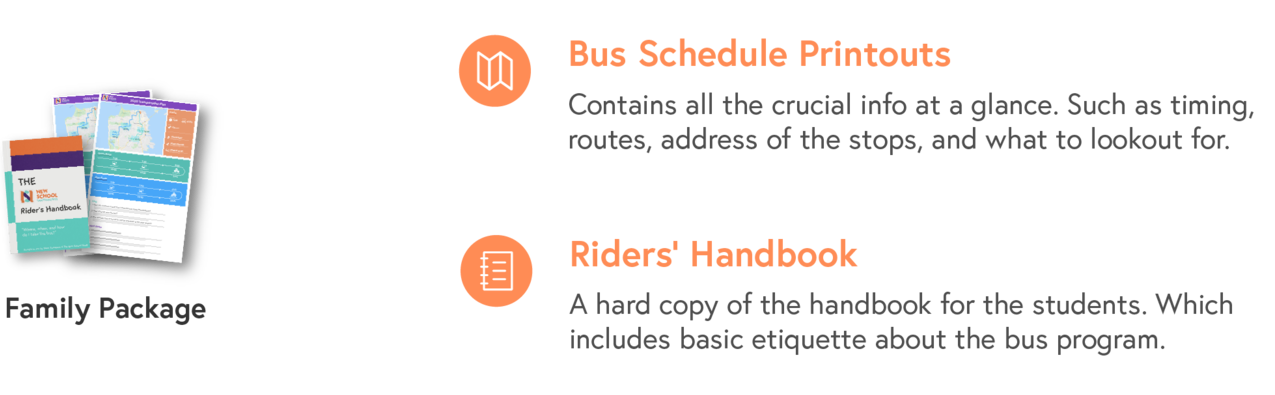
The last piece of the puzzle in our solution framework came in the form of a family package that contains all necessary materials about the program. The Rider’s Handbook includes DOs and DON’Ts onboard the bus, and instructions to different stops.
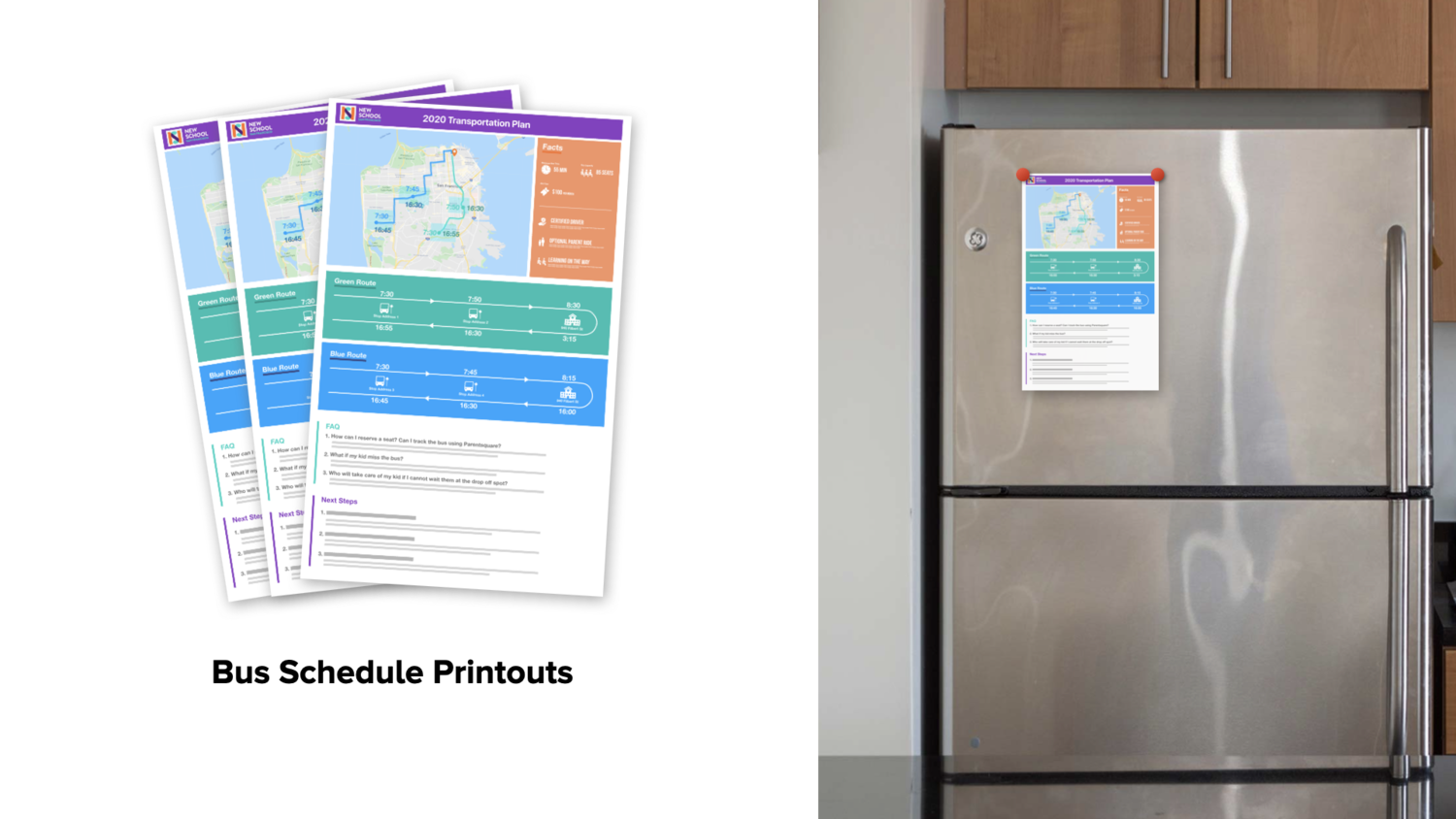
Meanwhile, the package also included a flyer that contains the schedule and general information of the bus program for each family. Which can be utilized in a variety of ways, for example, spreading the words to newly enrolled families.
Conclusion
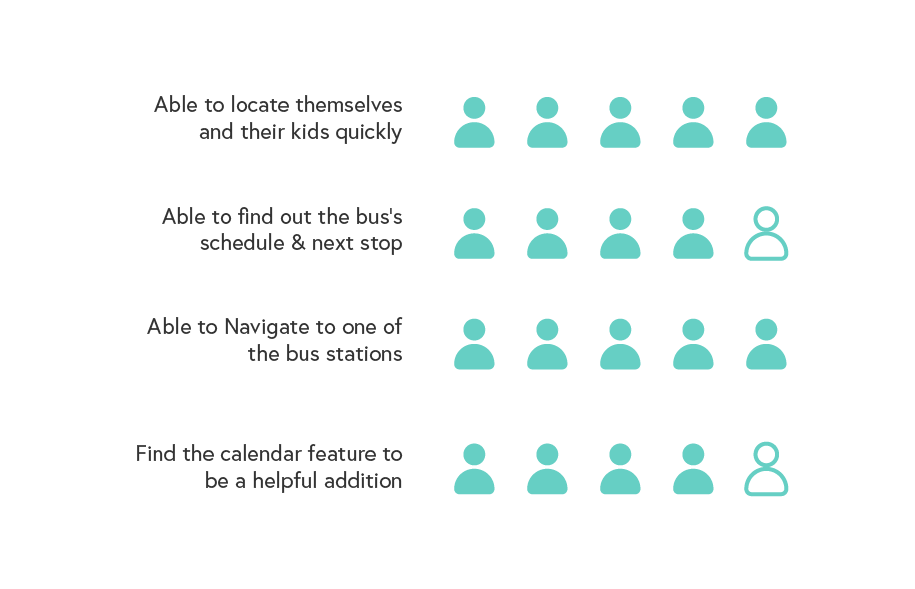
After months of user research, analysis and design, I was able to validate the design before handing it off to the school leadership. I did this by testing my clickable prototype with 5 student parents. The results are:
1) Find out student's whereabout: 5 out of 5 users were able to locate themselves & their kids in 7 seconds.
2) Check Bus's Scheduling: 4 out of 5 users were able to find the bus's schedule & next station without hints.
3) Quickly navigate to bus stops: 5 out 5 users were able to switch to other Map App with the pop-up menu.
4) Calendar Feature: 4 out of 5 users found the feature to be helpful in keeping up with school events.
"I appreciate the kind note, the update on the project, and the work you have put into our school's transportation planning. Yes, the challenges of shelter-in-place and reopening are real, and - at times - daunting. I'm thankful for your flexibility as we both moved through these uncertainties."
---- Ryan Chapman, Head & Co-founder of The New School SF
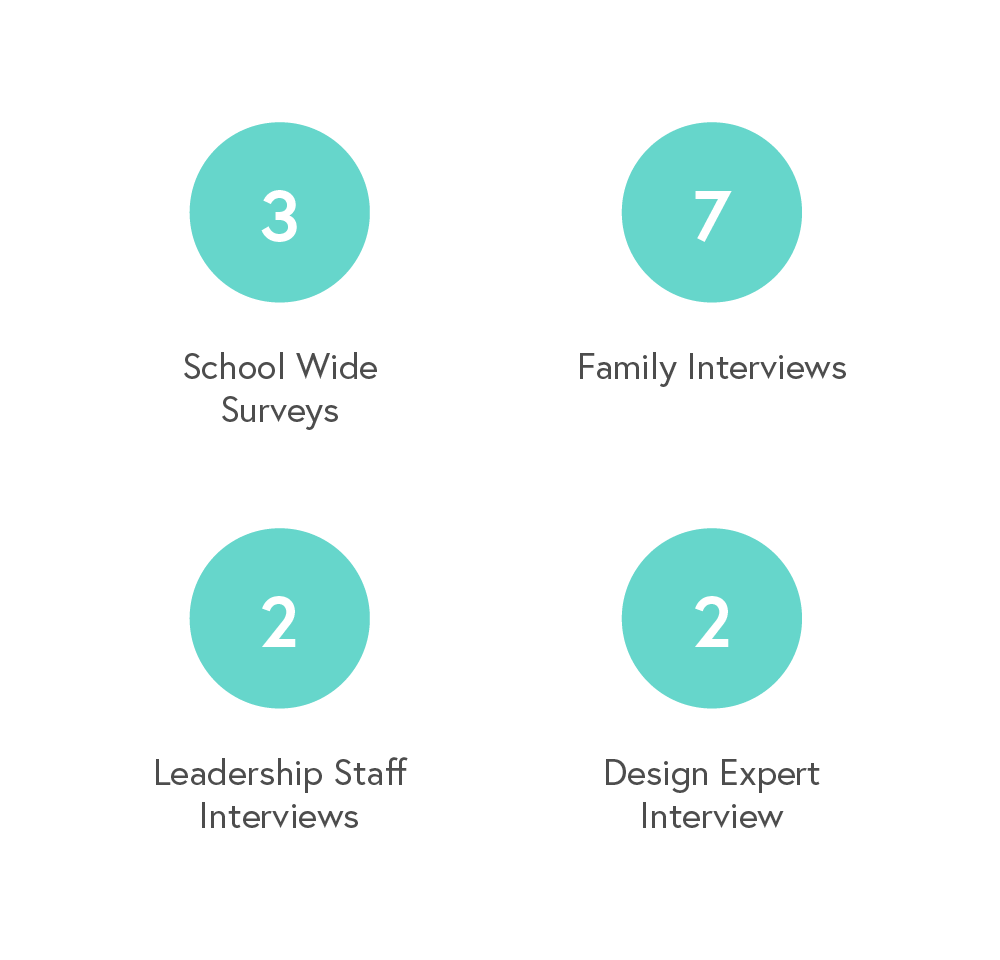
We conducted our research through a varies of methods, both Quantitative and Qualitative, followed by synthesis and ideation. By working closely with the key stakeholders, we were able to identify the problem space and generate ideas a lot better.
The first step is to understand what does our problem space looks like. So we conducted our background research during a home-school meeting, talking with parents from different parts of the city. The result served as the foundation for future research.
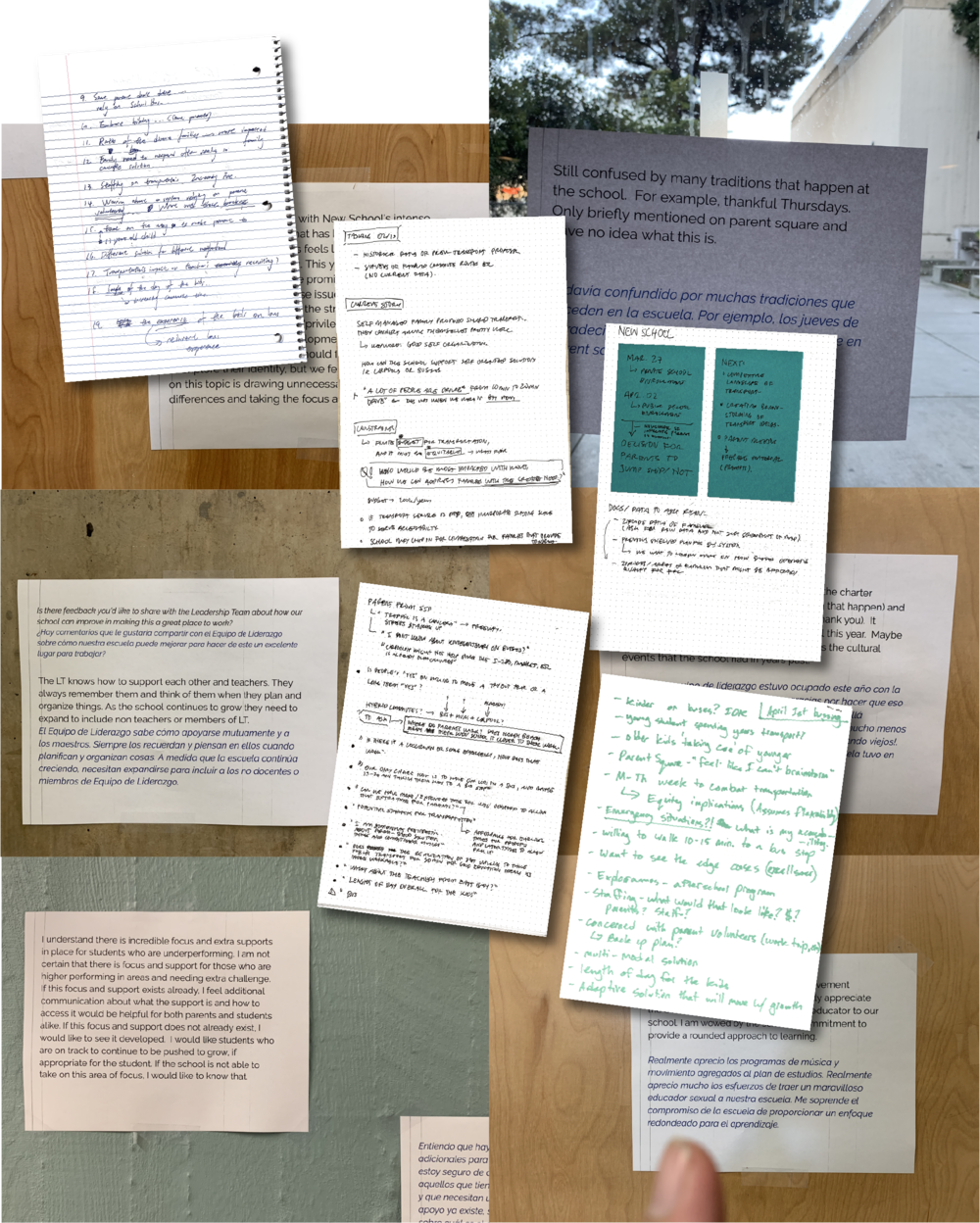
- The move will significantly increase travel time for many families on each trip.
- Parents are against the idea of letting kids ride public transportations unsupervised.
- Some families are facing the choice of switching schools or relocate if school buses are not available.
We had the great opportunity of working with a partner who understands the importance of data gathering and thus has access to a wealth of quantifiable information. Meanwhile, a dedicated survey was sent out to gauge interest and gather thoughts on the transportation plan from the parent community.
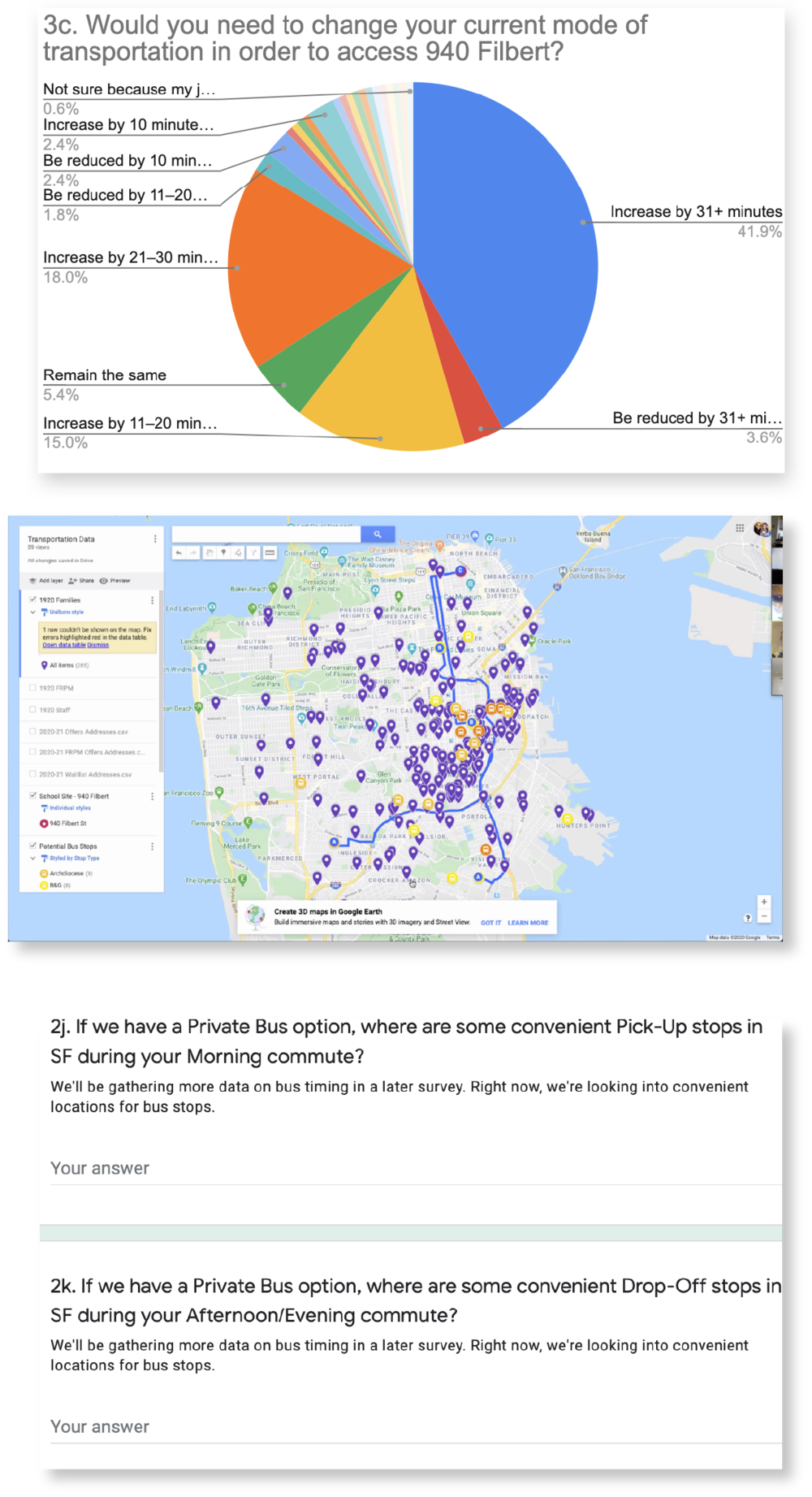
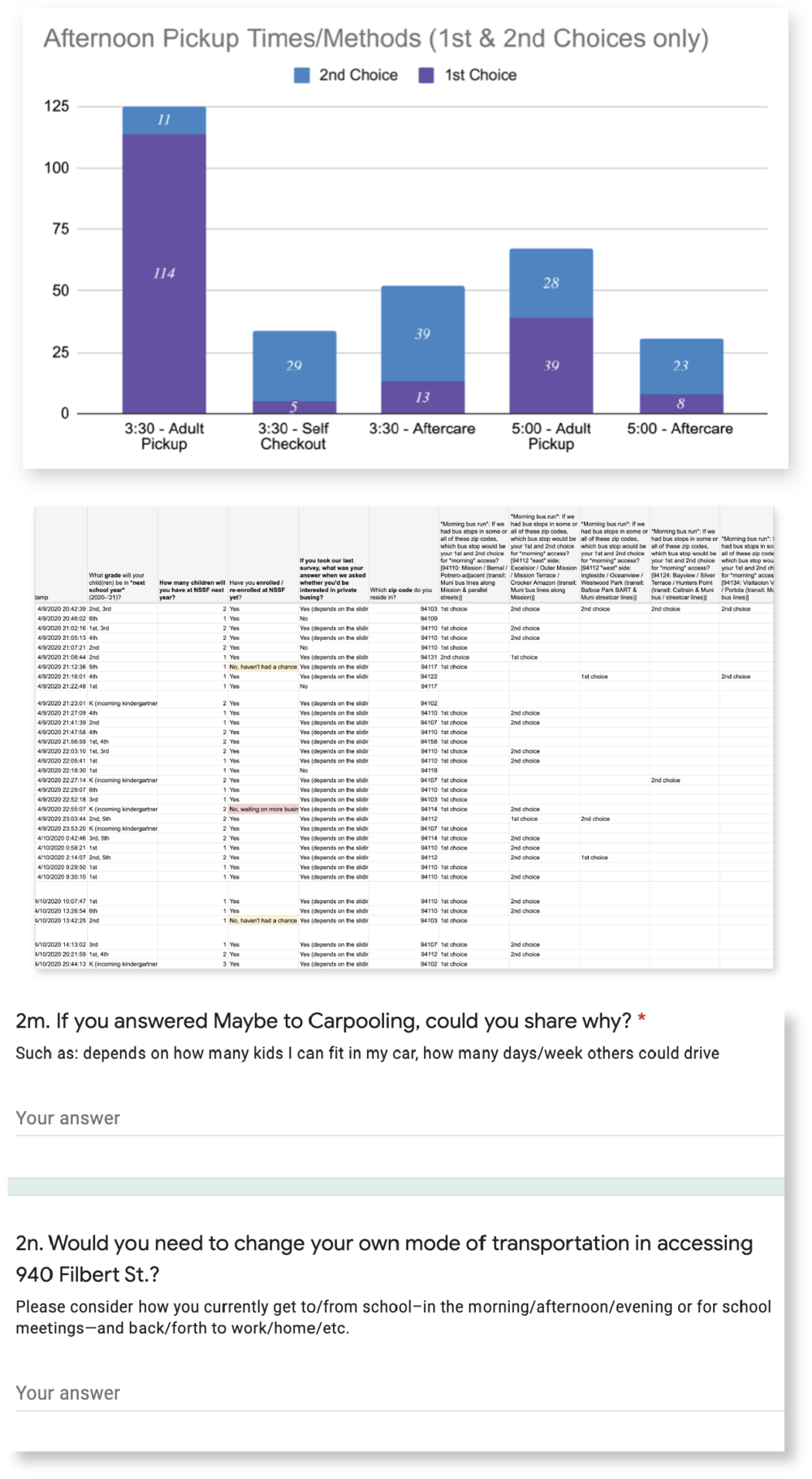
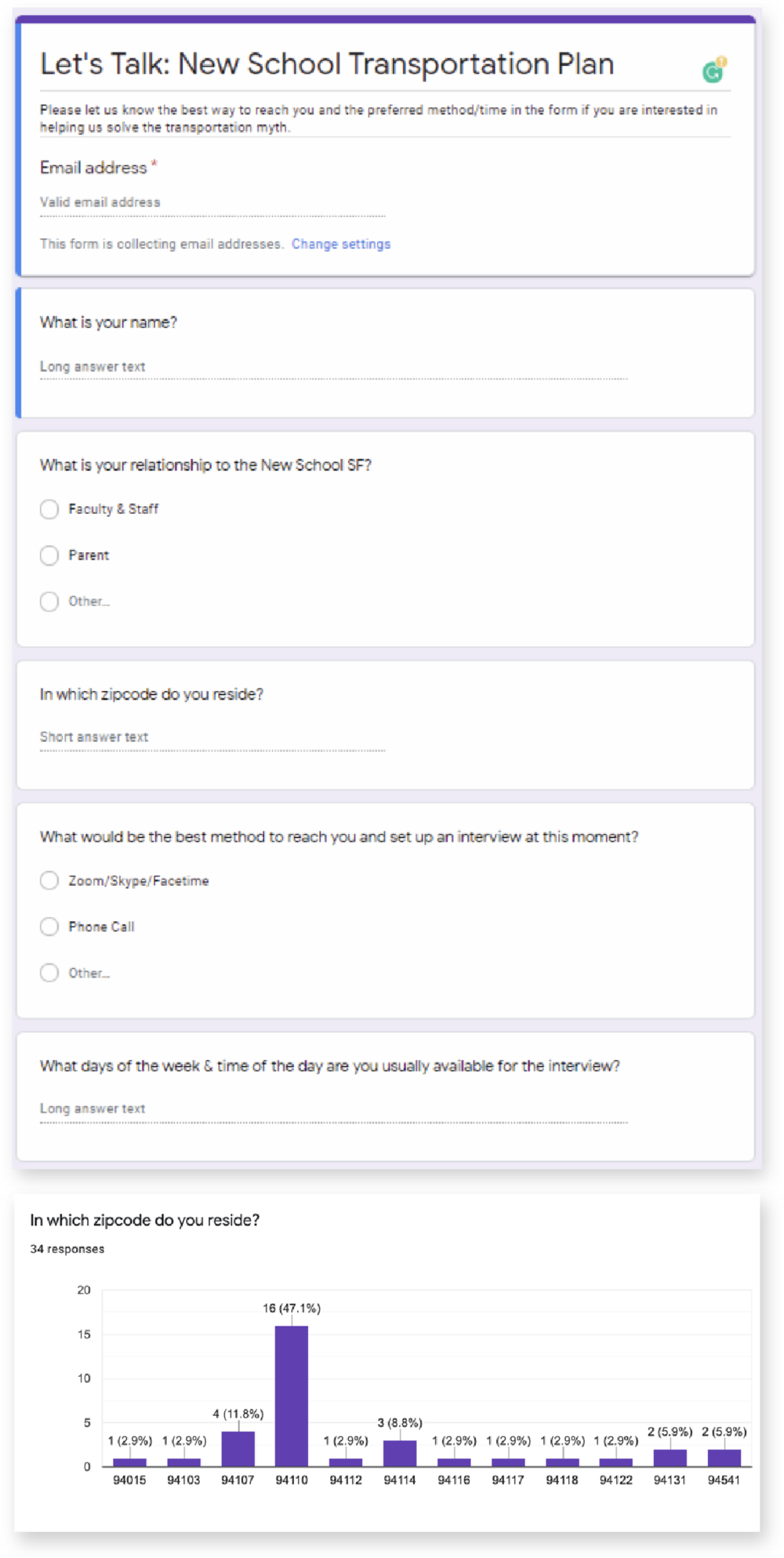


- A high percentage of families reside in the Mission District and South San Francisco.
- Around 75% of parents surveyed are expecting at least 20 min per trip increase in their daily commute.
- Nearly 60% of parents drive their kids to school on a daily basis.
We interviewed both New School staff members that are coordinating the bus plan, and parents who are interested in sharing their thoughts with us. The goals are to gain a better understanding of New School’s equity-driven experiences from all perspectives, and hearing opinions and experiences that would ultimately decide the form of our solution.
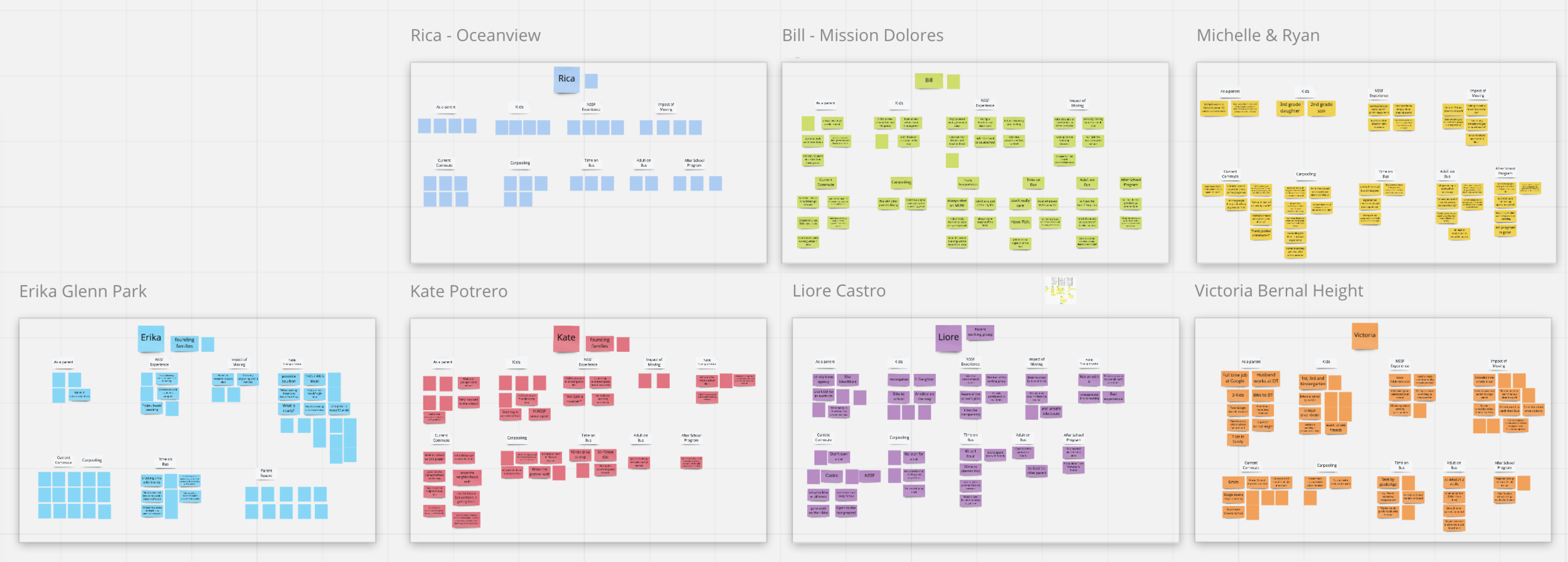
We decided it’s a good idea to synthesize our findings before going down the rabbit hole of ideation.
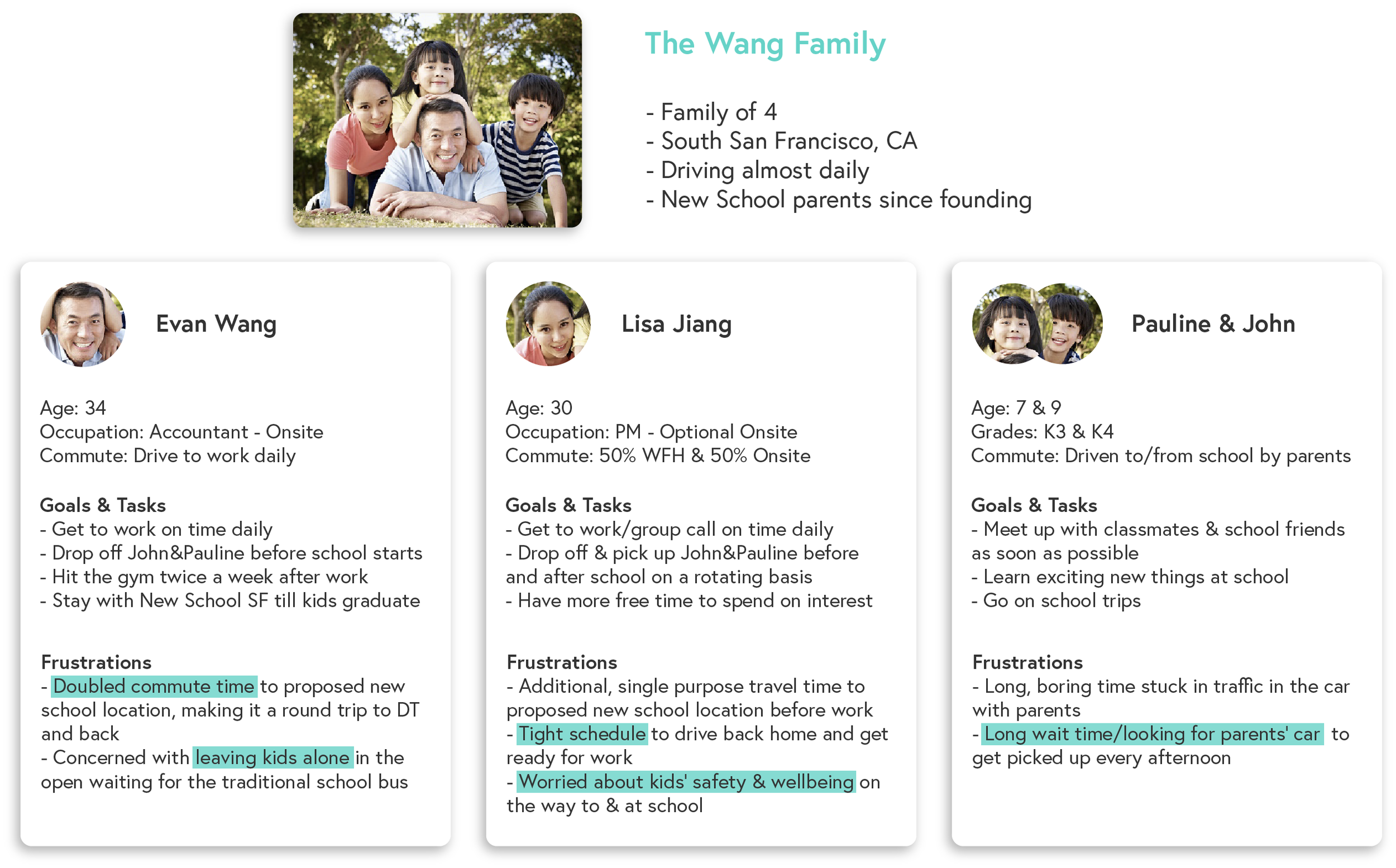
Patterns started emerging as we were sorting the research data under different themes. And we were able to develop the a complete family persona before reaching to insights that inspired our design:
Parents want reassurance regarding safe travel and trustworthy supervisor during commutes.
"One reason that I drive my kid to school is I need to make sure he gets covered by the faculty."
The students and families commute in a variety of ways due to their different daily routines.
"We have to set up different pick-up hours for students in different after school activities."
The New School parents are encouraged to be involved with the school's activities and functions.
"I'm running a carpool with 3 other families right now to save gas and time."
Many parents we interviewed put emphasis on the bus schedule to determine future plans.
"I can't pick up my kid after school everyday due to my current schedule."
The time onboard is valuable for students to spend with their friends.
"My kid love to see his friends on the way to school."
Some families living farther away with little transportation options are considering relocation to suit their needs.
"We even thought about moving to somewhere closer to the new campus."
Using the themes, we were able to create a family persona which was presented and discussed with the school leadership. It has proven to be a great foundation to move into feature ideation and prototyping.
An effective way to give the parents a peace of mind would be having trusted individuals riding along on each trip.
Students & families' varied daily schedule create different needs for transport. Which calls for flexibility within the system.
The parents' community involvement is one of New School's strength and differentiators. Utilizing that means more roles the parents can play in the bus program.
It is essential to keep parents in the loop for changes and updates so the program can work with their own personal schedule.
Backed by our research findings, a couple of “How might we’s” and some mild brainstorming. The design principles comes naturally without much resistance.
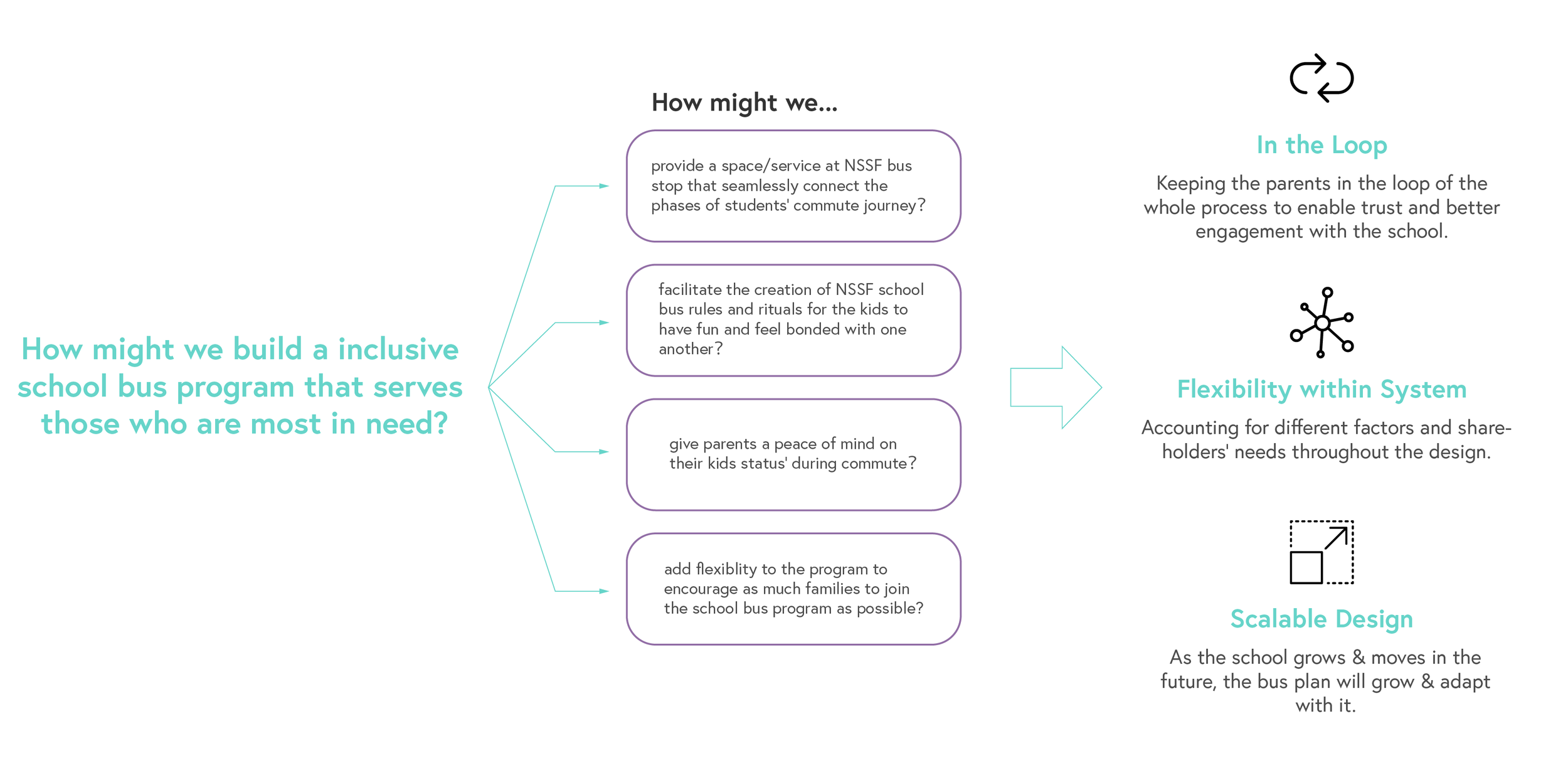
With a clear set of guiding principles and some real-world boundaries in mind, we went through the ideation process and focused our attention on creating an end-to-end experience for the new school families.
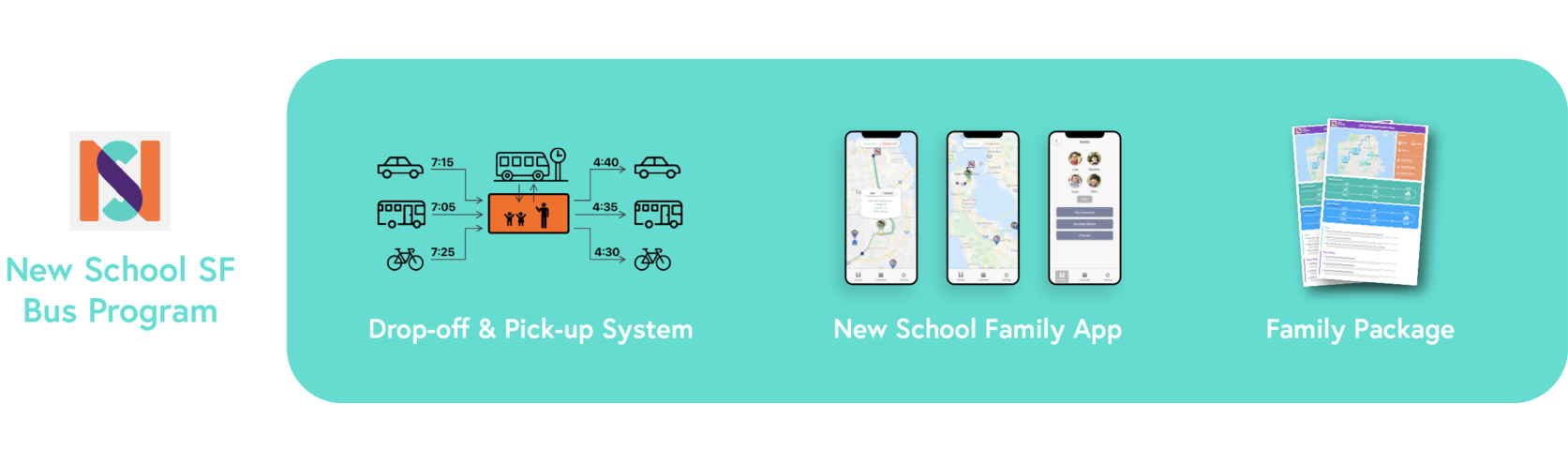
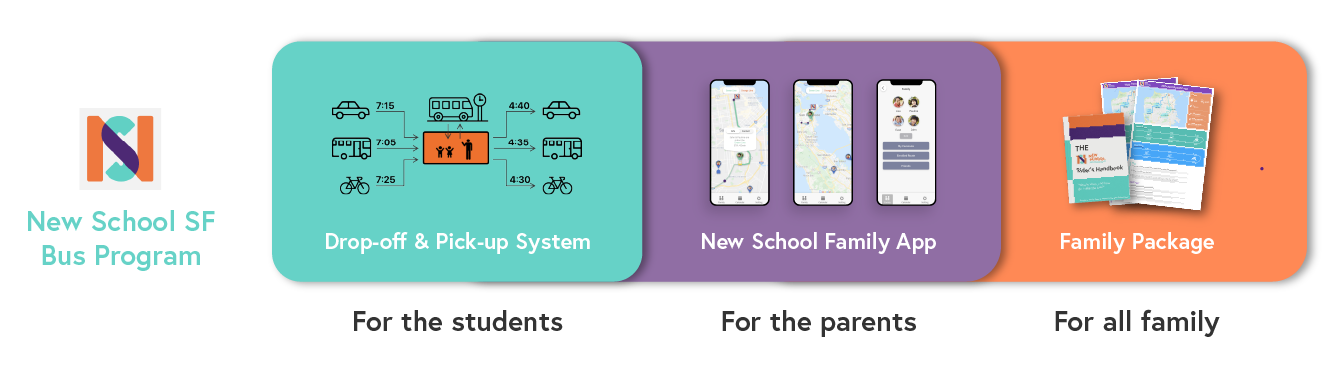
Knowing that we are looking for a systematic solution. We pivoted from focusing solely on the planning and logistics of the school bus and created a 3-part solution to cover each new school families’ journey from their home to school and back; within it, I'm responsible for designing the Family mobile App.
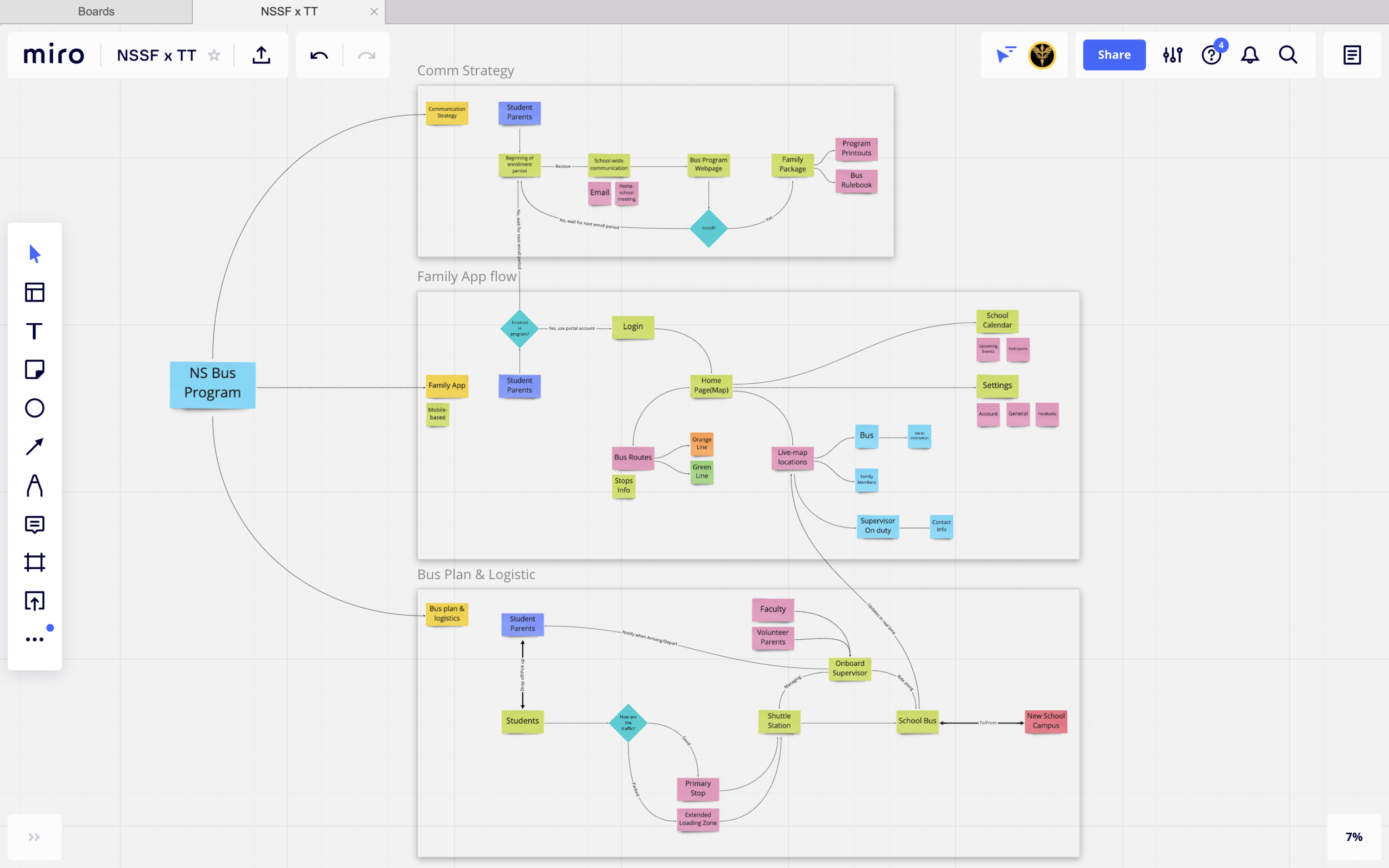
An Info Architecture Map was created to better communicate the Family App’s userflow to the developers. Check it out HERE.
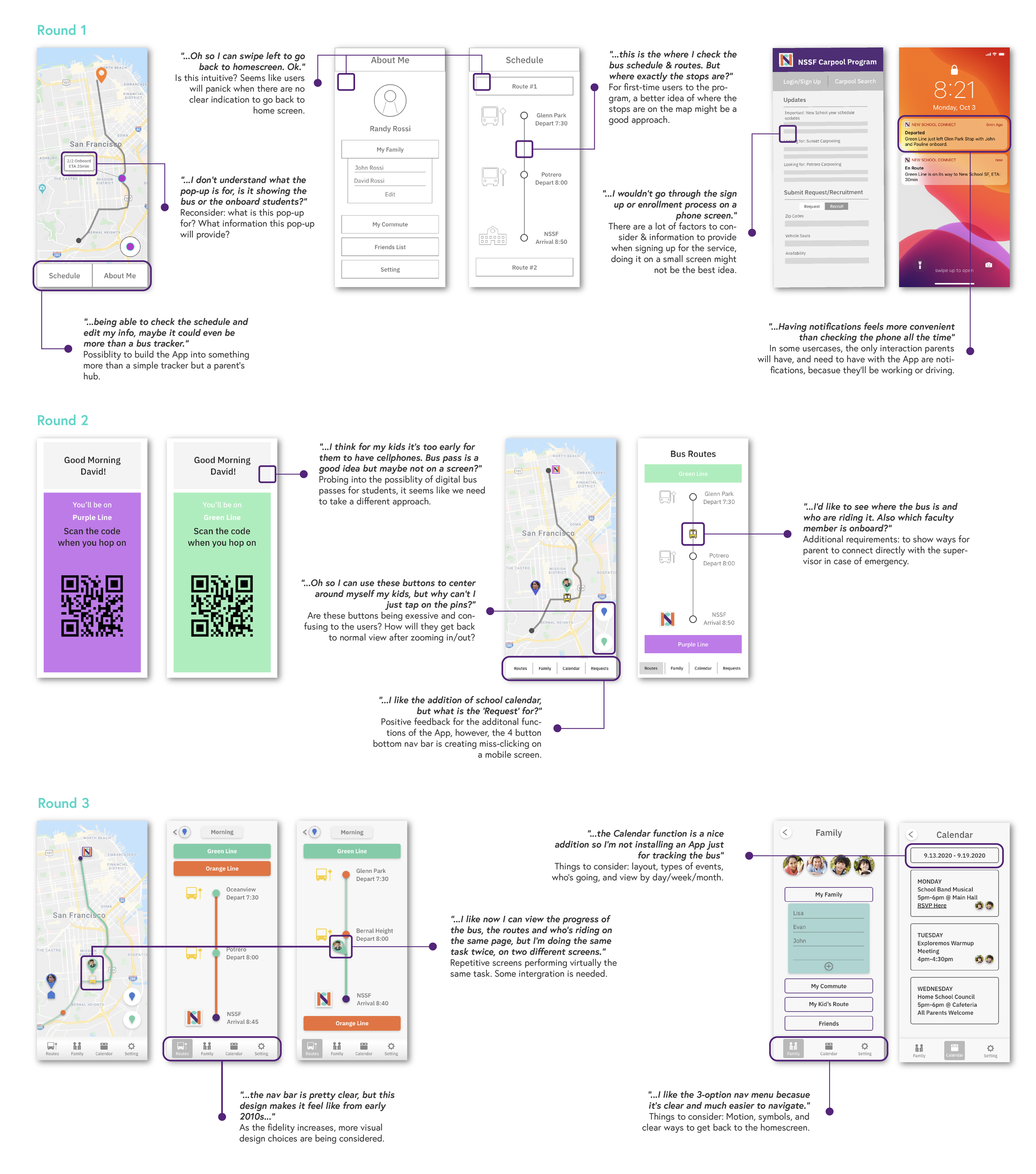
A Minimal Viable Prototype is necessary in order to get as much feedback from the students' parents as possible. 3 rounds of testing and many feedbacks later, I’m confident in building the final product.

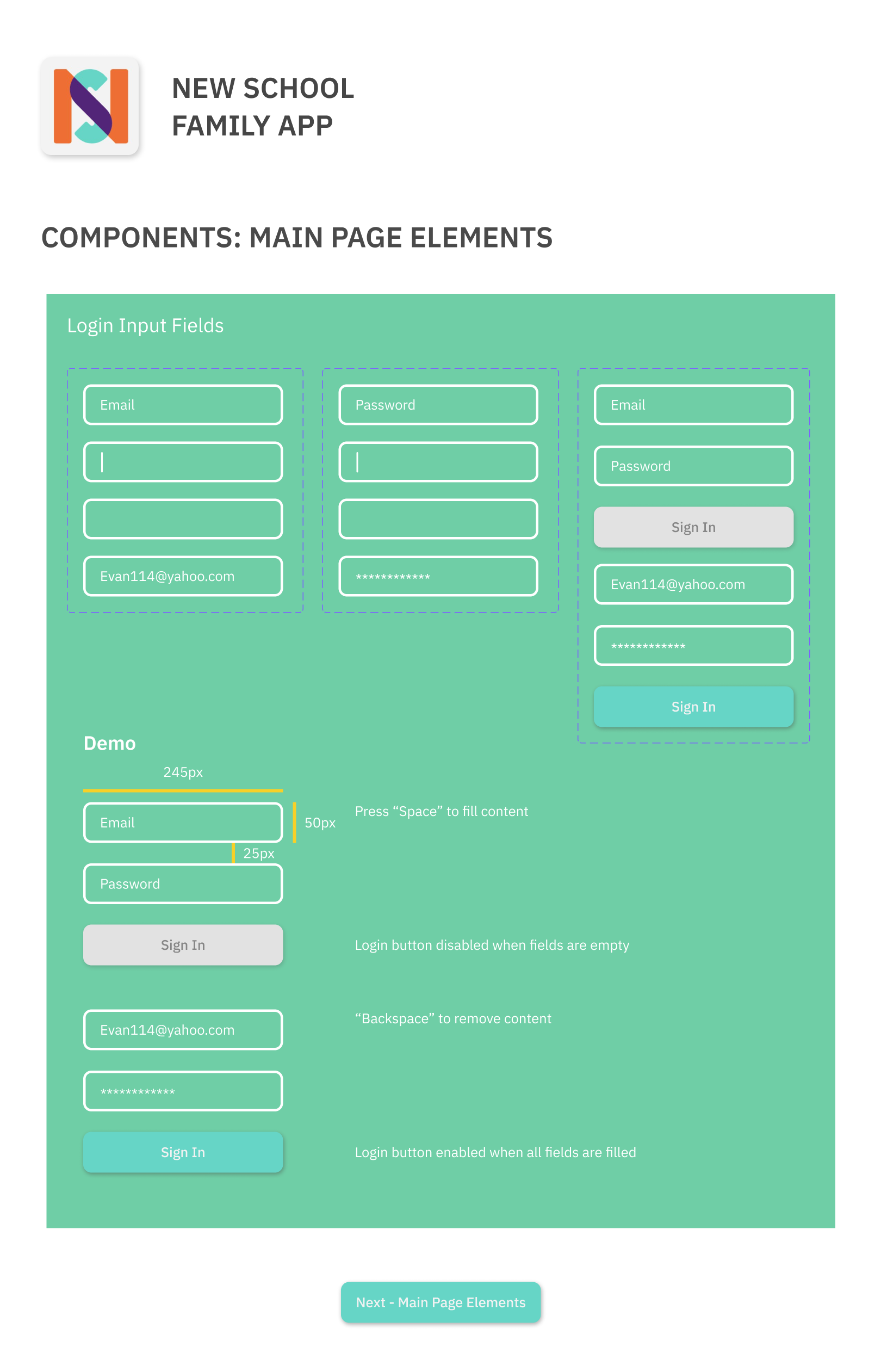
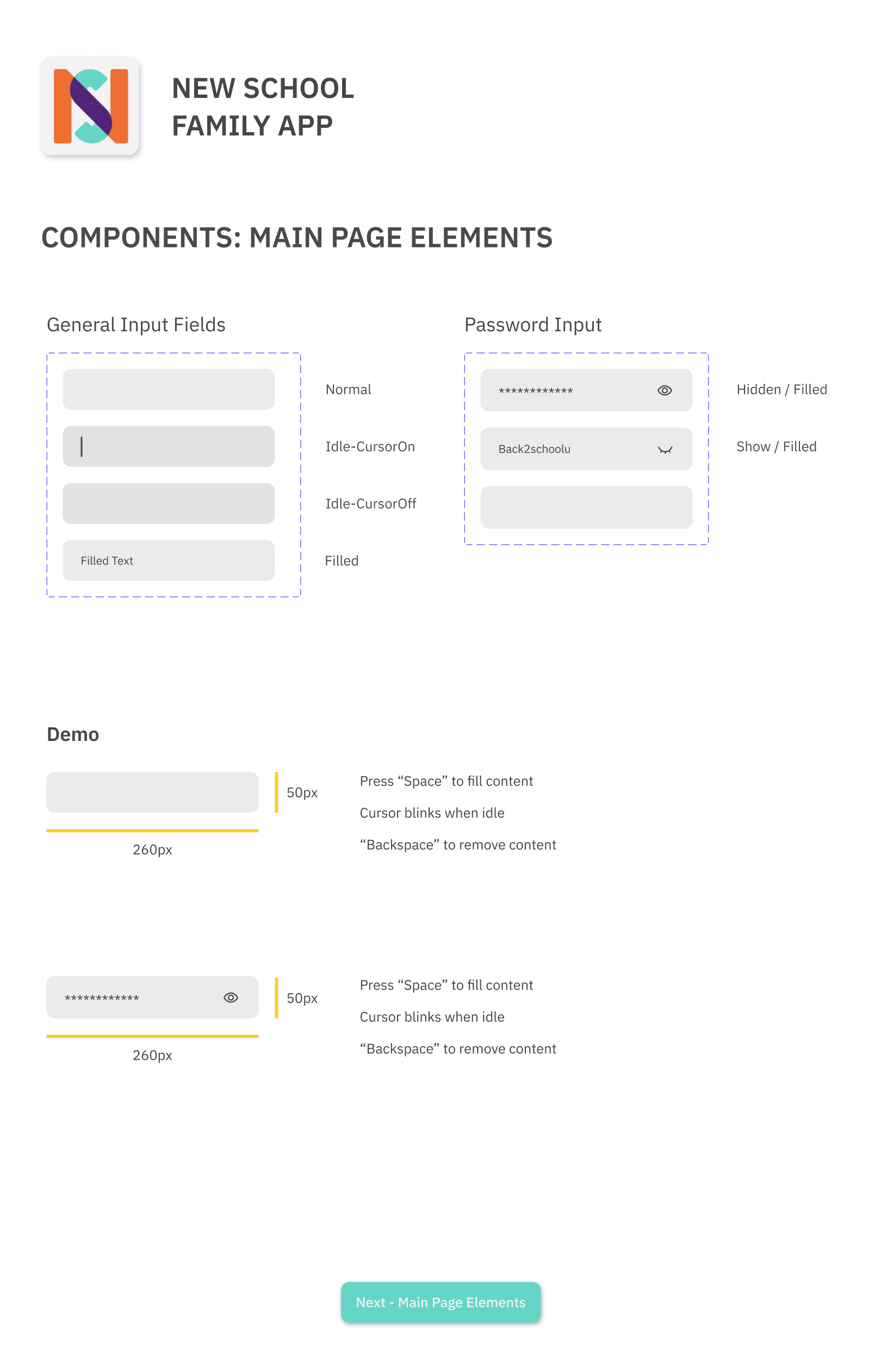
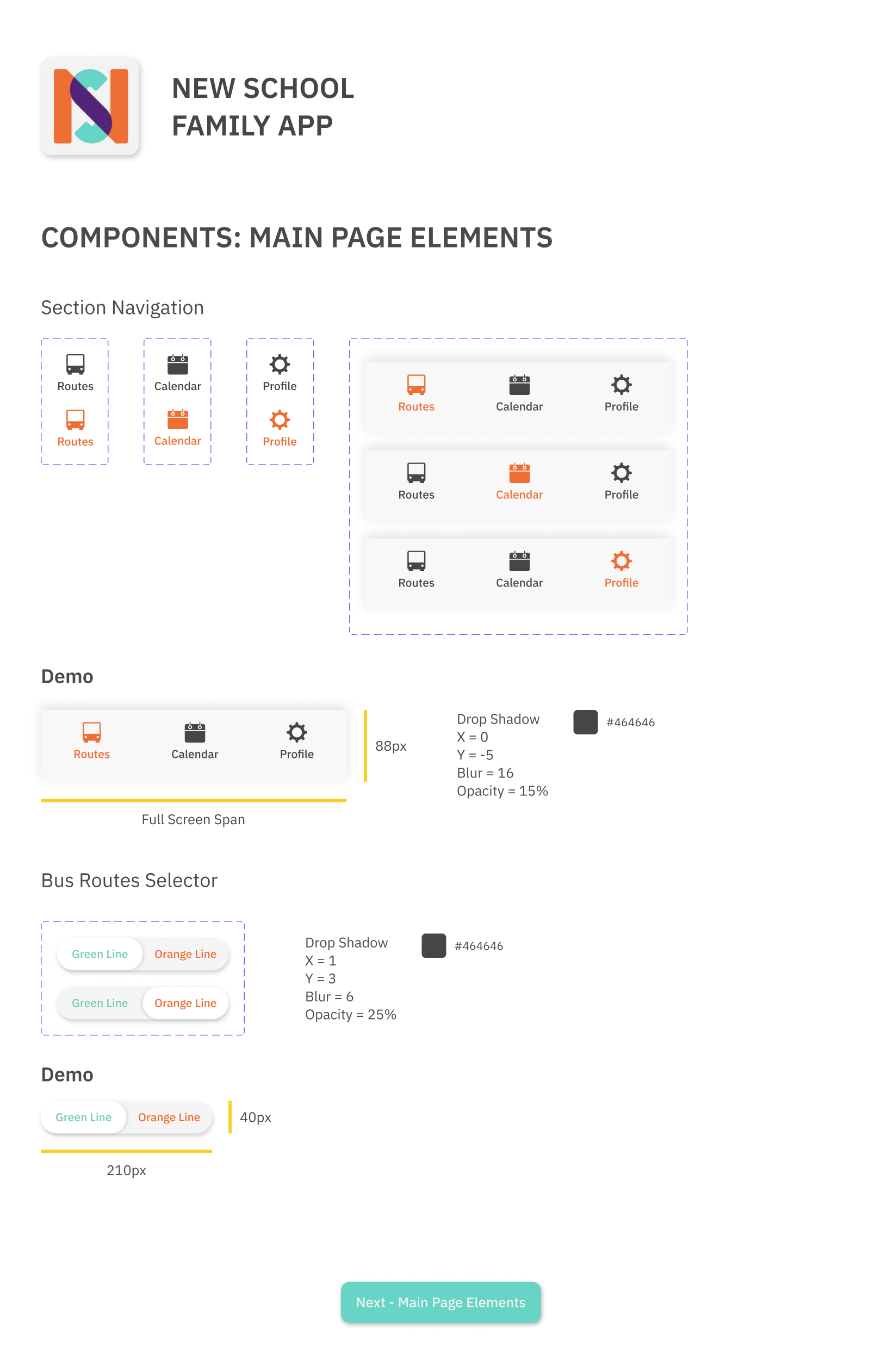
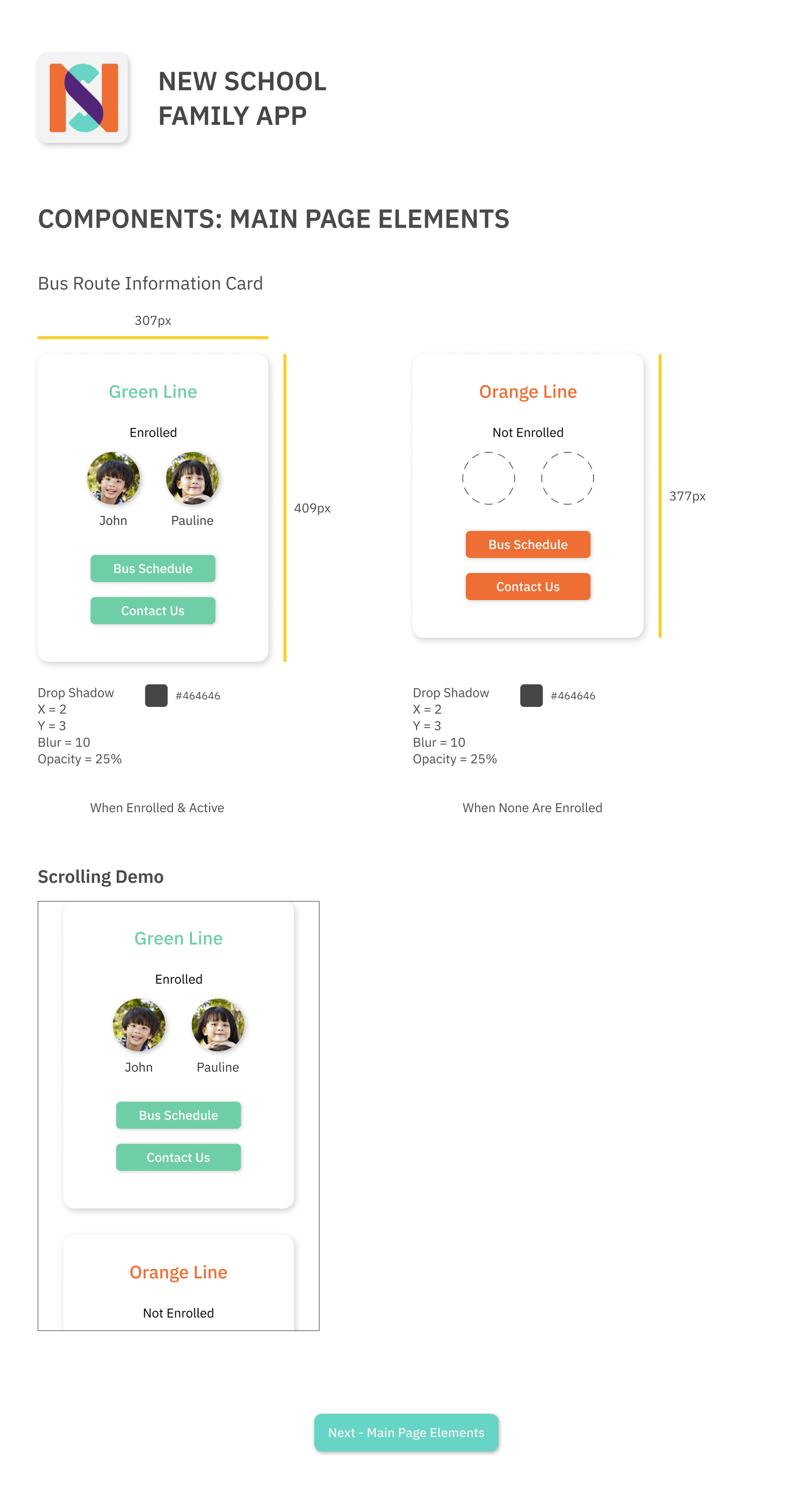
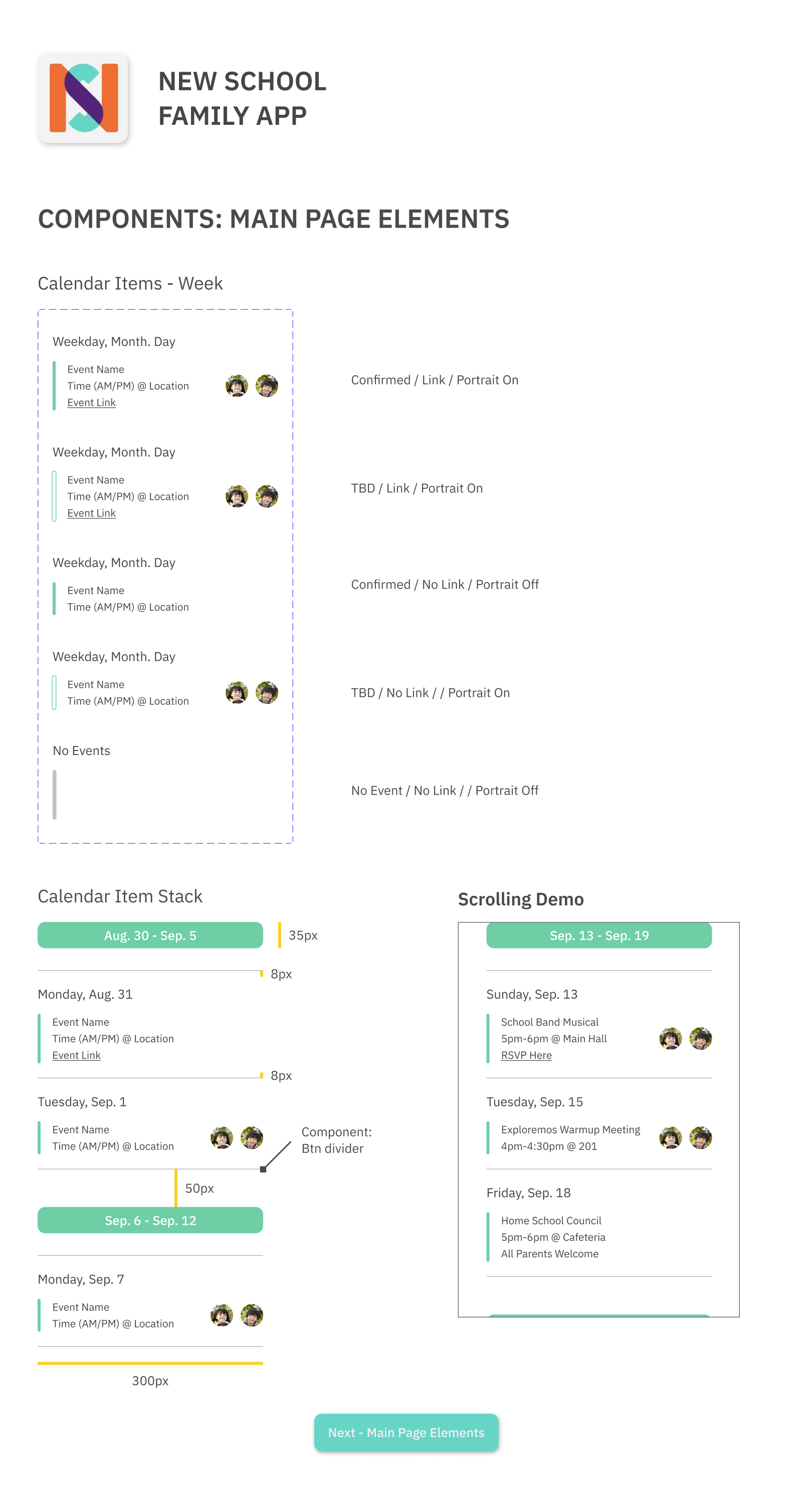
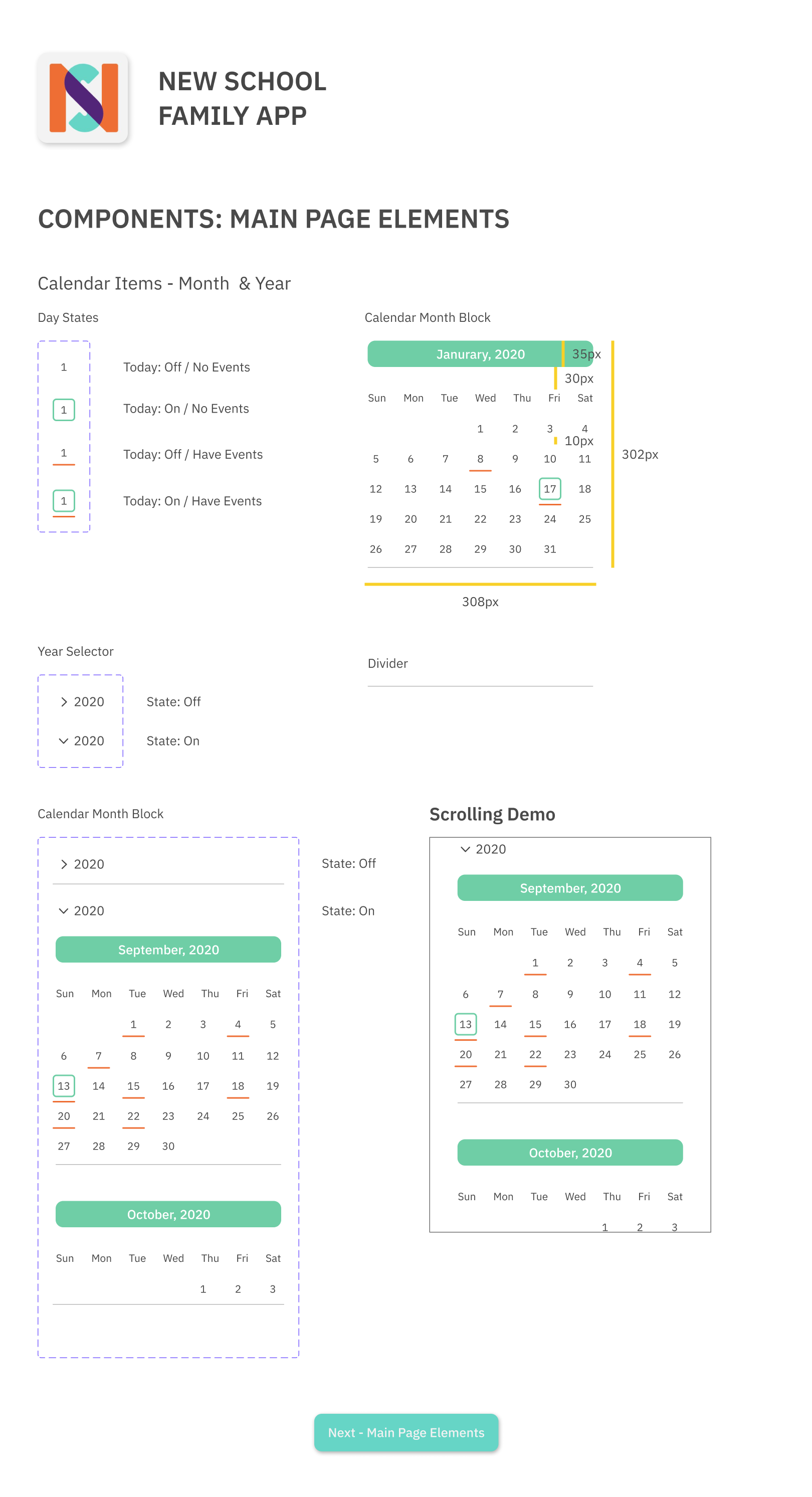
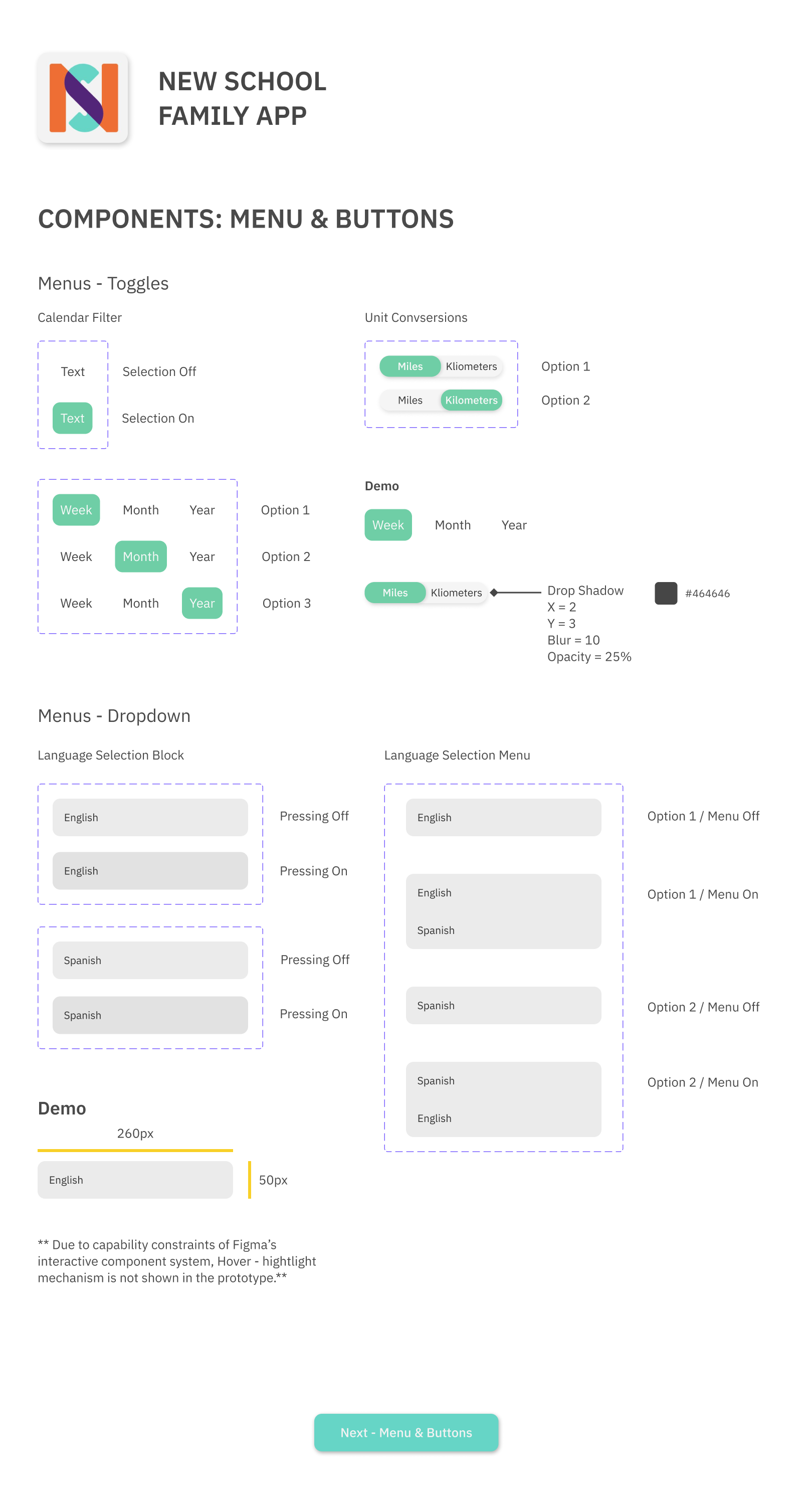
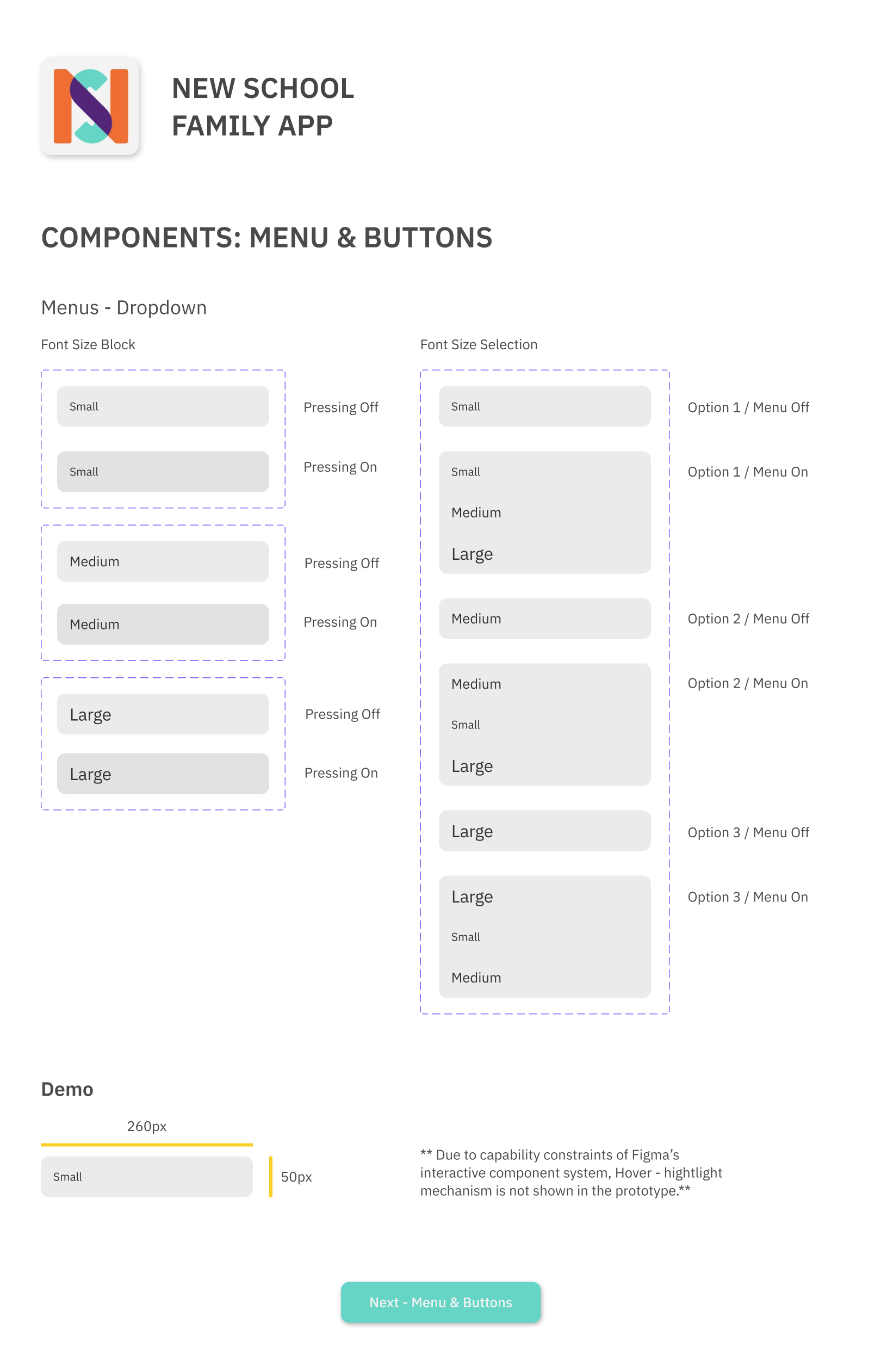
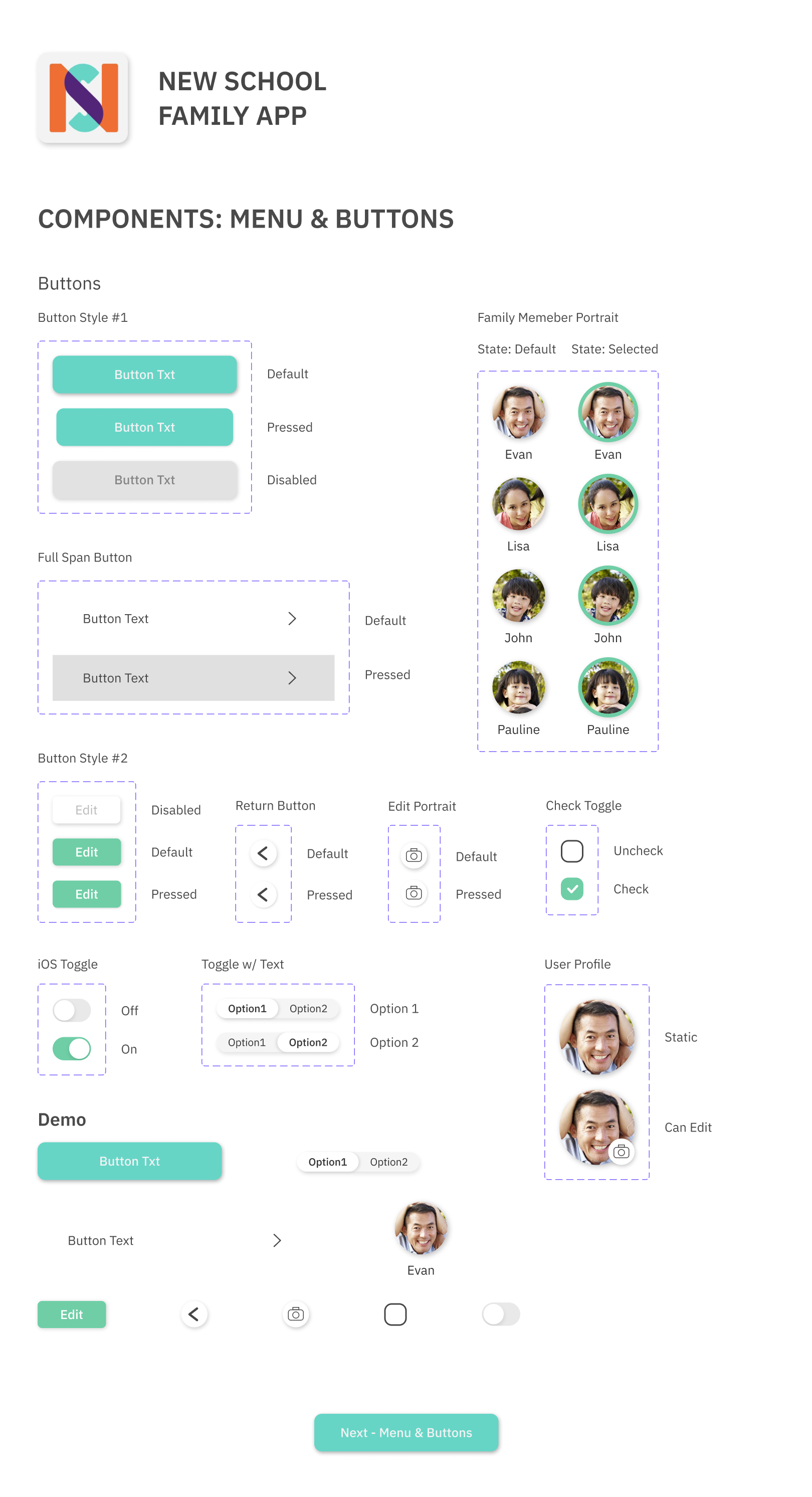
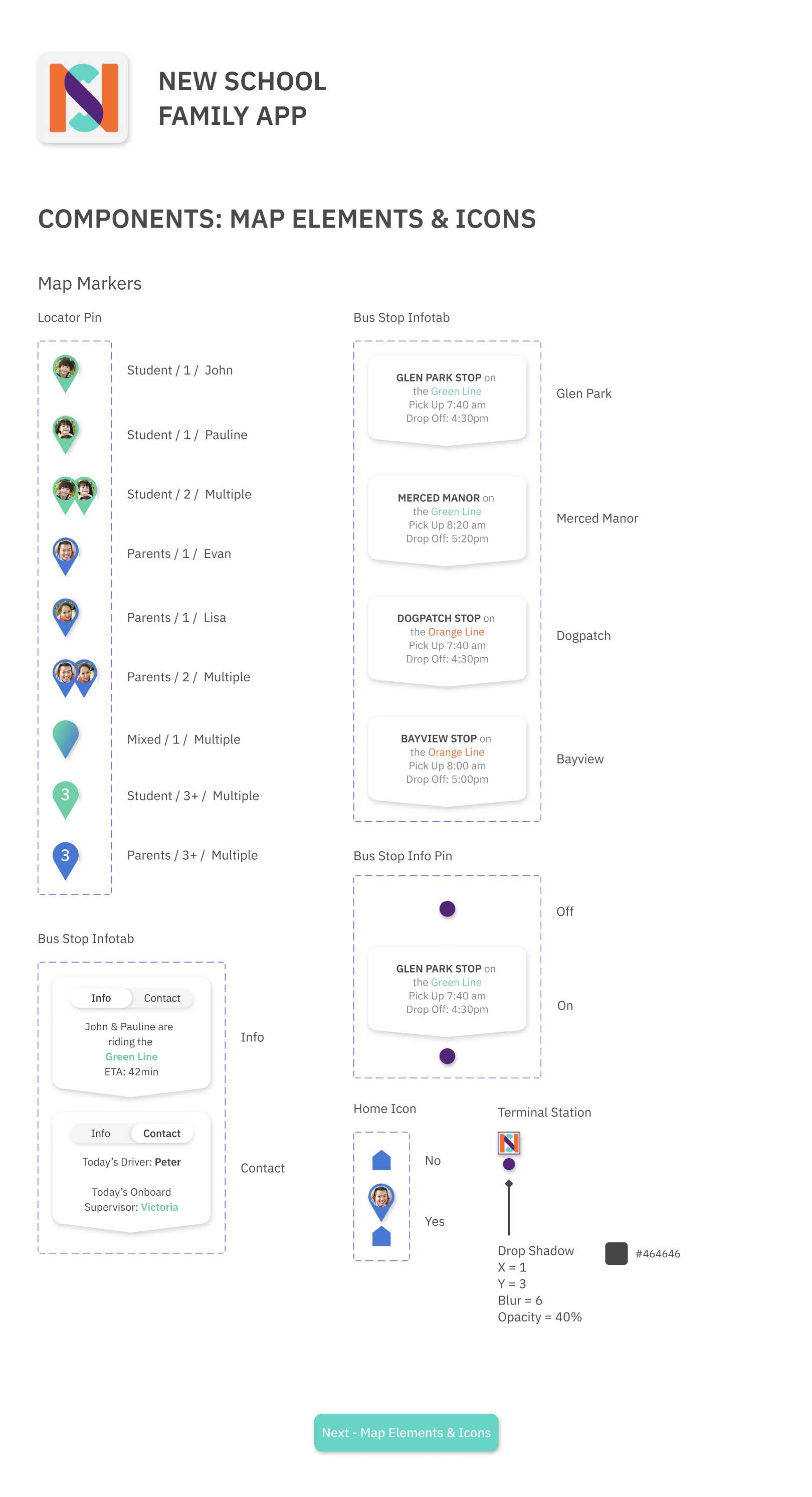
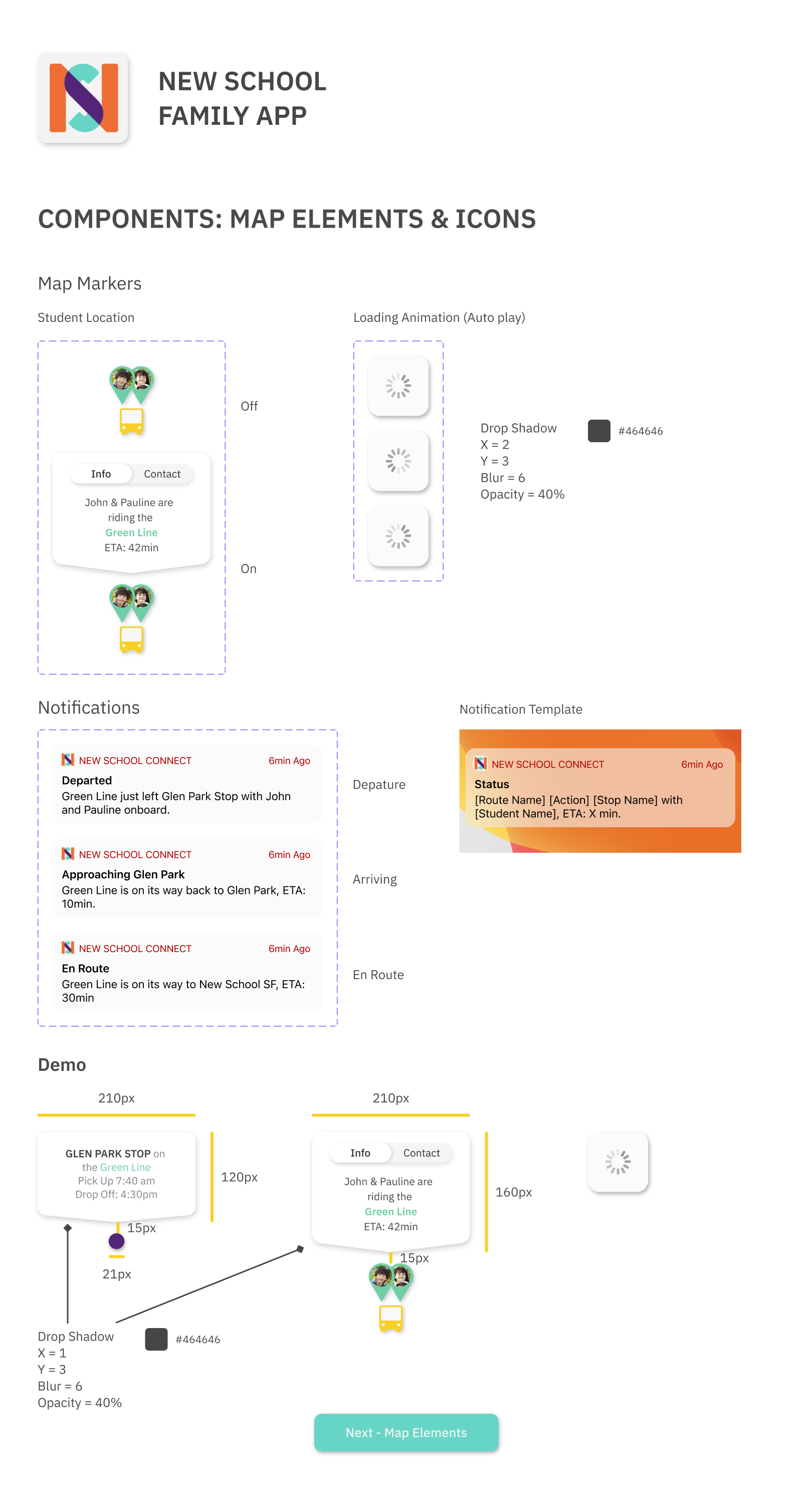
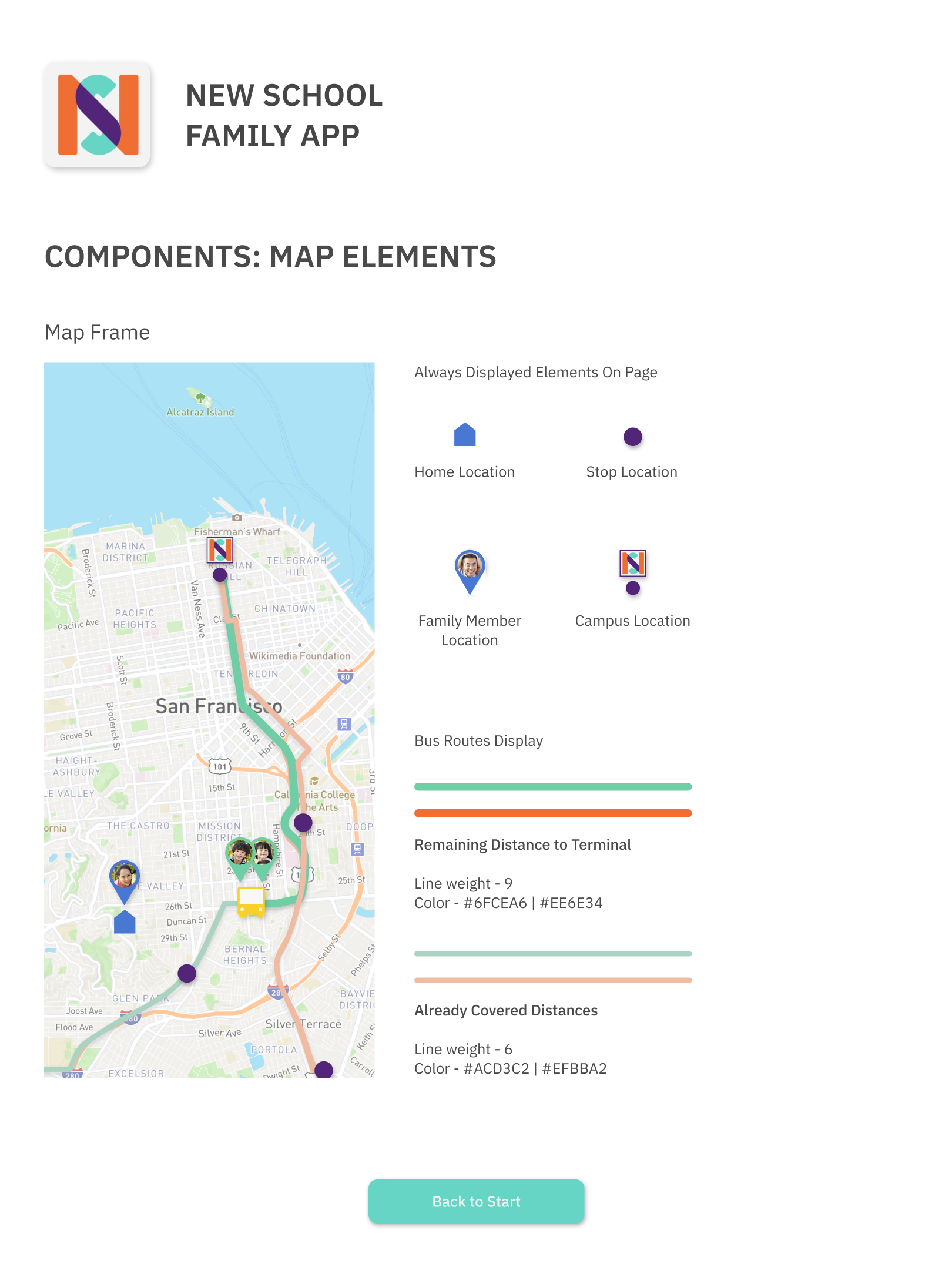
In order to align the mobile design with the rest of the program, I continued to use the New School’s color scheme and created a design guide for the front-end developers as a reference.
Click HERE to view the interactive visual guide.
As of December 2020, We officially handed the project over to the New School transportation planning committee. All assets & documents have been forwarded to them and we are expecting the system along with the app to be developed and implemented as soon as the returning to campus is deemed safe.
Even though our progress was interrupted by COVID and its subsequent stay-at-home order, the project wasn’t abandoned. The situation has forced New School to shift the majority of its attention to the transition to online learning, however, we acknowledged that there will still be demands for a well-sorted bus program at the time of reopening.
It is not the first project that got stashed (even temporarily), neither it would be the last. However, this is a project I have mixed feelings about because it showed me the importance of project management and adapting to change: There were occasions that I step up to take a leading role so the entire project can move forward, meanwhile, it also taught me how to be flexible in the grand scheme of things.
My Takeaways:
1) A clear, executable project plan is essential: We are fortunate enough to started the project with a vision from the school leadership - An inclusive bus program that commutes students to the new campus. However, many questions which were to define our project scope, are still left unanswered. It took us a sizable amount of effort to find them out through the subsequent research, such as the school's capabilities & level of commitment, available resources, etc.
2) Design is collaboration: User experience design is rarely dependent on the designer's artistic expression, but relies on the feedback from the users & subject matter experts. During our process, we see the value of inviting key stakeholders to join our design process through co-design and ideation sessions to maximize efficiency of the feedback - iteration loop, and helped me decide key features & interactions of the mobile app.
3) Mutual agreement of commitment: Service design is a group efforts among all parties - the product team and their client. I found it's immensely helpful for both sides to be upfront about their capabilities and level of commitment in the early on so there's a clear channel of communication and visible boundaries&limitations.